Tecniche avanzate per QAOA
Stima di utilizzo: 3 minuti su un processore Heron r2 (NOTA: Questa è solo una stima. Il tempo di esecuzione effettivo può variare.)
Prerequisiti
-
Basi dell'algoritmo di ottimizzazione approssimata quantistica (QAOA)
-
Il tutorial Risolvere problemi di ottimizzazione quantistica su scala utility
-
La lezione Utility-scale QAOA (parte del corso Quantum computing in practice) su IBM Quantum® Learning
Risultati dell'apprendimento
- Usare tecniche avanzate che aiutano a migliorare la transpilazione QAOA e forniscono un mezzo per migliorare le prestazioni di QAOA
Per una panoramica dettagliata dei contenuti di questo tutorial, guarda questo video Qiskit.
Contesto
Questo tutorial introduce due tecniche avanzate per migliorare le prestazioni dell'Algoritmo di Ottimizzazione Approssimata Quantistica (QAOA) con un grande numero di qubit.
Le tecniche avanzate in questo notebook includono:
-
Strategia SWAP con mappatura iniziale SAT: Questo è un pass di transpilazione specificamente progettato per QAOA che utilizza una strategia SWAP e un solutore SAT insieme per migliorare la selezione di quali qubit fisici sulla QPU utilizzare. La strategia SWAP sfrutta la commutatività degli operatori QAOA per riordinare i gate in modo che livelli di gate SWAP possano essere eseguiti simultaneamente, riducendo così la profondità del circuito [1]. Il solutore SAT viene utilizzato per trovare una mappatura iniziale che minimizzi il numero di operazioni SWAP necessarie per mappare i qubit nel circuito ai qubit fisici sul dispositivo [2].
-
Funzione di costo CVaR: Tipicamente il valore atteso dell'Hamiltoniana di costo viene utilizzato come funzione di costo per QAOA, ma come mostrato in [3], concentrarsi sulla coda della distribuzione, piuttosto che sul valore atteso, può migliorare le prestazioni di QAOA per problemi di ottimizzazione combinatoria. Il CVaR realizza questo obiettivo. Per un dato insieme di shots con corrispondenti valori obiettivo del problema di ottimizzazione considerato, il Conditional Value at Risk (CVaR) con livello di confidenza è definito come la media degli migliori shots [3]. Quindi, corrisponde al valore atteso standard, mentre corrisponde al minimo degli shots dati, e è un compromesso tra concentrarsi sugli shots migliori, pur applicando una certa media per smussare il paesaggio di ottimizzazione. Inoltre, il CVaR può essere utilizzato come tecnica di mitigazione dell'errore per migliorare la qualità della stima del valore obiettivo [4].
Al termine di questo tutorial, sarai in grado di usare queste tecniche per ottenere i migliori risultati dall'esecuzione di QAOA per i tuoi problemi di ottimizzazione.
Requisiti
Prima di iniziare questo tutorial, assicurati di avere installato quanto segue:
-
Qiskit SDK v2.0 o successivo, con supporto per la visualizzazione
-
Qiskit Runtime v0.43 o successivo (
pip install qiskit-ibm-runtime) -
Libreria di grafi Rustworkx (
pip install rustworkx) -
Python SAT (
pip install python-sat)
Configurazione
# Added by doQumentation — installs the packages this notebook needs if they are missing
import importlib.util

_needed = {"matplotlib": "matplotlib", "numpy": "numpy", "pysat": "python-sat", "qiskit": "qiskit", "qiskit_ibm_runtime": "qiskit-ibm-runtime", "rustworkx": "rustworkx", "scipy": "scipy"}
_missing = [pip for module, pip in _needed.items()
            if importlib.util.find_spec(module) is None]
# One at a time, so a package that fails to install does not block the others
for _pip in _missing:
    %pip install -q {_pip}
if not _missing:
    print("\u2713 All required packages are installed")
from __future__ import annotations

import numpy as np
import rustworkx as rx
from dataclasses import dataclass
from itertools import combinations
from threading import Timer
from collections.abc import Callable, Iterable
from pysat.formula import CNF, IDPool
from pysat.solvers import Solver
from scipy.optimize import minimize
from rustworkx.visualization import mpl_draw as draw_graph

from qiskit.quantum_info import SparsePauliOp
from qiskit.circuit.library import QAOAAnsatz
from qiskit.circuit import QuantumCircuit, ParameterVector
from qiskit.transpiler import CouplingMap, PassManager
from qiskit.transpiler.preset_passmanagers import generate_preset_pass_manager
from qiskit.transpiler.passes.routing.commuting_2q_gate_routing import (
    SwapStrategy,
    FindCommutingPauliEvolutions,
    Commuting2qGateRouter,
)

from qiskit_ibm_runtime import QiskitRuntimeService, Session
from qiskit_ibm_runtime import SamplerV2 as Sampler
Problema max-cut
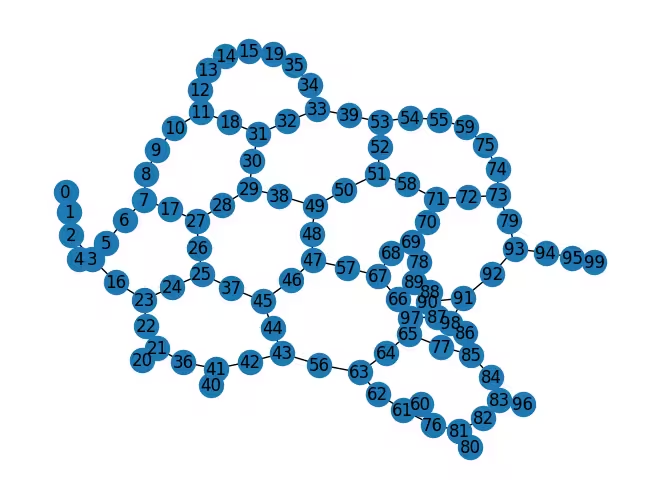
Consideriamo la risoluzione del problema max-cut su un grafo con 100 nodi utilizzando QAOA. Il problema max-cut è un problema di ottimizzazione combinatoria definito su un grafo , dove è l'insieme dei vertici ed è l'insieme degli archi. L'obiettivo è partizionare i vertici in due insiemi, e , in modo tale che il numero di archi tra i due insiemi sia massimizzato. In questo esempio, utilizziamo un grafo con 100 nodi che è basato su una mappa di accoppiamento hardware.
Esempio su simulatore su piccola scala
Poiché l'obiettivo di questo tutorial è mostrare come QAOA si comporta a scale oltre quelle gestibili da un simulatore, salteremo questo passo.
Se vuoi provare un workflow QAOA basato su simulatore, prova il tutorial Quantum approximate optimization algorithm.
Esempio su hardware su larga scala
Step 1: Mappare gli input classici a un problema quantistico
Grafo → Hamiltoniana
Per prima cosa, mappiamo il problema su un circuito quantistico adatto per QAOA. I dettagli su questo processo possono essere trovati nel tutorial introduttivo su QAOA.
# Instantiate runtime to access backend
service = QiskitRuntimeService()
backend = service.least_busy(
    min_num_qubits=100, operational=True, simulator=False
)
print(backend)
<IBMBackend('ibm_fez')>
# Check if the coupling map is symmetric. We will add a conditional below
# to avoid over-counting edges for symmetric/bi-directional coupling maps.

backend.coupling_map.is_symmetric
True
n = 100
graph_100 = rx.PyGraph()
graph_100.add_nodes_from((np.arange(0, n, 1)))
w = 1.0
elist = []

for edge in backend.coupling_map:
    if (edge[0] < n) and (edge[1] < n):
        # Conditional to avoid over-counting edges
        if (
            edge[1],
            edge[0],
            w,
        ) not in elist:
            elist.append((edge[0], edge[1], w))

graph_100.add_edges_from(elist)
draw_graph(graph_100, with_labels=True)
# Construct cost hamiltonian

def build_max_cut_paulis(graph: rx.PyGraph) -> list[tuple[str, float]]:
    """Convert the graph to Pauli list.

    This function does the inverse of `build_max_cut_graph`
    """
    pauli_list = []
    for edge in list(graph.edge_list()):
        paulis = ["I"] * len(graph)
        paulis[edge[0]], paulis[edge[1]] = "Z", "Z"

        weight = graph.get_edge_data(edge[0], edge[1])

        pauli_list.append(("".join(paulis)[::-1], weight))

    return pauli_list

max_cut_paulis = build_max_cut_paulis(graph_100)

cost_hamiltonian = SparsePauliOp.from_list(max_cut_paulis)
print("Cost Function Hamiltonian:", cost_hamiltonian)
Cost Function Hamiltonian: SparsePauliOp(['IIIIIIIIIIIIIIIIIIIIIIIIIIIIIIIIIIIIIIIIIIIIIIIIIIIIIIIIIIIIIIIIIIIIIIIIIIIIIIIIIIIIIIIIIIIIIIIIIIZZ', 'IIIIIIIIIIIIIIIIIIIIIIIIIIIIIIIIIIIIIIIIIIIIIIIIIIIIIIIIIIIIIIIIIIIIIIIIIIIIIIIIIIIIIIIIIIIIIIIIIZZI', 'IIIIIIIIIIIIIIIIIIIIIIIIIIIIIIIIIIIIIIIIIIIIIIIIIIIIIIIIIIIIIIIIIIIIIIIIIIIIIIIIIIIIIIIIIIIIIIIIZZII', 'IIIIIIIIIIIIIIIIIIIIIIIIIIIIIIIIIIIIIIIIIIIIIIIIIIIIIIIIIIIIIIIIIIIIIIIIIIIIIIIIIIIIIIIIIIIIIIIZZIII', 'IIIIIIIIIIIIIIIIIIIIIIIIIIIIIIIIIIIIIIIIIIIIIIIIIIIIIIIIIIIIIIIIIIIIIIIIIIIIIIIIIIIZIIIIIIIIIIIIZIII', 'IIIIIIIIIIIIIIIIIIIIIIIIIIIIIIIIIIIIIIIIIIIIIIIIIIIIIIIIIIIIIIIIIIIIIIIIIIIIIIIIIIIIIIIIIIIIIIZZIIII', 'IIIIIIIIIIIIIIIIIIIIIIIIIIIIIIIIIIIIIIIIIIIIIIIIIIIIIIIIIIIIIIIIIIIIIIIIIIIIIIIIIIIIIIIIIIIIIZZIIIII', 'IIIIIIIIIIIIIIIIIIIIIIIIIIIIIIIIIIIIIIIIIIIIIIIIIIIIIIIIIIIIIIIIIIIIIIIIIIIIIIIIIIIIIIIIIIIIZZIIIIII', 'IIIIIIIIIIIIIIIIIIIIIIIIIIIIIIIIIIIIIIIIIIIIIIIIIIIIIIIIIIIIIIIIIIIIIIIIIIIIIIIIIIIIIIIIIIIZZIIIIIII', 'IIIIIIIIIIIIIIIIIIIIIIIIIIIIIIIIIIIIIIIIIIIIIIIIIIIIIIIIIIIIIIIIIIIIIIIIIIIIIIIIIIZIIIIIIIIIZIIIIIII', 'IIIIIIIIIIIIIIIIIIIIIIIIIIIIIIIIIIIIIIIIIIIIIIIIIIIIIIIIIIIIIIIIIIIIIIIIIIIIIIIIIIIIIIIIIIZZIIIIIIII', 'IIIIIIIIIIIIIIIIIIIIIIIIIIIIIIIIIIIIIIIIIIIIIIIIIIIIIIIIIIIIIIIIIIIIIIIIIIIIIIIIIIIIIIIIIZZIIIIIIIII', 'IIIIIIIIIIIIIIIIIIIIIIIIIIIIIIIIIIIIIIIIIIIIIIIIIIIIIIIIIIIIIIIIIIIIIIIIIIIIIIIIIIIIIIIIZZIIIIIIIIII', 'IIIIIIIIIIIIIIIIIIIIIIIIIIIIIIIIIIIIIIIIIIIIIIIIIIIIIIIIIIIIIIIIIIIIIIIIIIIIIIIIIIIIIIIZZIIIIIIIIIII', 'IIIIIIIIIIIIIIIIIIIIIIIIIIIIIIIIIIIIIIIIIIIIIIIIIIIIIIIIIIIIIIIIIIIIIIIIIIIIIIIIIZIIIIIIZIIIIIIIIIII', 'IIIIIIIIIIIIIIIIIIIIIIIIIIIIIIIIIIIIIIIIIIIIIIIIIIIIIIIIIIIIIIIIIIIIIIIIIIIIIIIIIIIIIIZZIIIIIIIIIIII', 'IIIIIIIIIIIIIIIIIIIIIIIIIIIIIIIIIIIIIIIIIIIIIIIIIIIIIIIIIIIIIIIIIIIIIIIIIIIIIIIIIIIIIZZIIIIIIIIIIIII', 'IIIIIIIIIIIIIIIIIIIIIIIIIIIIIIIIIIIIIIIIIIIIIIIIIIIIIIIIIIIIIIIIIIIIIIIIIIIIIIIIIIIIZZIIIIIIIIIIIIII', 'IIIIIIIIIIIIIIIIIIIIIIIIIIIIIIIIIIIIIIIIIIIIIIIIIIIIIIIIIIIIIIIIIIIIIIIIIIIIIIIIZIIIZIIIIIIIIIIIIIII', 'IIIIIIIIIIIIIIIIIIIIIIIIIIIIIIIIIIIIIIIIIIIIIIIIIIIIIIIIIIIIIIIIIIIIIIIIIIIIZIIIIIIZIIIIIIIIIIIIIIII', 'IIIIIIIIIIIIIIIIIIIIIIIIIIIIIIIIIIIIIIIIIIIIIIIIIIIIIIIIIIIIIIIIIIIIIIIIZIIIIIIIIIZIIIIIIIIIIIIIIIII', 'IIIIIIIIIIIIIIIIIIIIIIIIIIIIIIIIIIIIIIIIIIIIIIIIIIIIIIIIIIIIIIIIIIIIZIIIIIIIIIIIIZIIIIIIIIIIIIIIIIII', 'IIIIIIIIIIIIIIIIIIIIIIIIIIIIIIIIIIIIIIIIIIIIIIIIIIIIIIIIIIIIIIIIZIIIIIIIIIIIIIIIZIIIIIIIIIIIIIIIIIII', 'IIIIIIIIIIIIIIIIIIIIIIIIIIIIIIIIIIIIIIIIIIIIIIIIIIIIIIIIIIIIIIIIIIIIIIIIIIIIIIZZIIIIIIIIIIIIIIIIIIII', 'IIIIIIIIIIIIIIIIIIIIIIIIIIIIIIIIIIIIIIIIIIIIIIIIIIIIIIIIIIIIIIIIIIIIIIIIIIIIIZZIIIIIIIIIIIIIIIIIIIII', 'IIIIIIIIIIIIIIIIIIIIIIIIIIIIIIIIIIIIIIIIIIIIIIIIIIIIIIIIIIIIIIIZIIIIIIIIIIIIIIZIIIIIIIIIIIIIIIIIIIII', 'IIIIIIIIIIIIIIIIIIIIIIIIIIIIIIIIIIIIIIIIIIIIIIIIIIIIIIIIIIIIIIIIIIIIIIIIIIIIZZIIIIIIIIIIIIIIIIIIIIII', 'IIIIIIIIIIIIIIIIIIIIIIIIIIIIIIIIIIIIIIIIIIIIIIIIIIIIIIIIIIIIIIIIIIIIIIIIIIIZZIIIIIIIIIIIIIIIIIIIIIII', 'IIIIIIIIIIIIIIIIIIIIIIIIIIIIIIIIIIIIIIIIIIIIIIIIIIIIIIIIIIIIIIIIIIIIIIIIIIZZIIIIIIIIIIIIIIIIIIIIIIII', 'IIIIIIIIIIIIIIIIIIIIIIIIIIIIIIIIIIIIIIIIIIIIIIIIIIIIIIIIIIIIIIIIIIIIIIIIIZZIIIIIIIIIIIIIIIIIIIIIIIII', 'IIIIIIIIIIIIIIIIIIIIIIIIIIIIIIIIIIIIIIIIIIIIIIIIIIIIIIIIIIIIIIZIIIIIIIIIIIZIIIIIIIIIIIIIIIIIIIIIIIII', 'IIIIIIIIIIIIIIIIIIIIIIIIIIIIIIIIIIIIIIIIIIIIIIIIIIIIIIIIIIIIIIIIIIIIIIIIZZIIIIIIIIIIIIIIIIIIIIIIIIII', 'IIIIIIIIIIIIIIIIIIIIIIIIIIIIIIIIIIIIIIIIIIIIIIIIIIIIIIIIIIIIIIIIIIIIIIIZZIIIIIIIIIIIIIIIIIIIIIIIIIII', 'IIIIIIIIIIIIIIIIIIIIIIIIIIIIIIIIIIIIIIIIIIIIIIIIIIIIIIIIIIIIIIIIIIIIIIZZIIIIIIIIIIIIIIIIIIIIIIIIIIII', 'IIIIIIIIIIIIIIIIIIIIIIIIIIIIIIIIIIIIIIIIIIIIIIIIIIIIIIIIIIIIIIIIIIIIIZZIIIIIIIIIIIIIIIIIIIIIIIIIIIII', 'IIIIIIIIIIIIIIIIIIIIIIIIIIIIIIIIIIIIIIIIIIIIIIIIIIIIIIIIIIIIIZIIIIIIIIZIIIIIIIIIIIIIIIIIIIIIIIIIIIII', 'IIIIIIIIIIIIIIIIIIIIIIIIIIIIIIIIIIIIIIIIIIIIIIIIIIIIIIIIIIIIIIIIIIIIZZIIIIIIIIIIIIIIIIIIIIIIIIIIIIII', 'IIIIIIIIIIIIIIIIIIIIIIIIIIIIIIIIIIIIIIIIIIIIIIIIIIIIIIIIIIIIIIIIIIIZZIIIIIIIIIIIIIIIIIIIIIIIIIIIIIII', 'IIIIIIIIIIIIIIIIIIIIIIIIIIIIIIIIIIIIIIIIIIIIIIIIIIIIIIIIIIIIIIIIIIZZIIIIIIIIIIIIIIIIIIIIIIIIIIIIIIII', 'IIIIIIIIIIIIIIIIIIIIIIIIIIIIIIIIIIIIIIIIIIIIIIIIIIIIIIIIIIIIIIIIIZZIIIIIIIIIIIIIIIIIIIIIIIIIIIIIIIII', 'IIIIIIIIIIIIIIIIIIIIIIIIIIIIIIIIIIIIIIIIIIIIIIIIIIIIIIIIIIIIZIIIIIZIIIIIIIIIIIIIIIIIIIIIIIIIIIIIIIII', 'IIIIIIIIIIIIIIIIIIIIIIIIIIIIIIIIIIIIIIIIIIIIIIIIIIIIIIIIIIIIIIIIZZIIIIIIIIIIIIIIIIIIIIIIIIIIIIIIIIII', 'IIIIIIIIIIIIIIIIIIIIIIIIIIIIIIIIIIIIIIIIIIIIIIIIIIIIIIIIIIZIIIIZIIIIIIIIIIIIIIIIIIIIIIIIIIIIIIIIIIII', 'IIIIIIIIIIIIIIIIIIIIIIIIIIIIIIIIIIIIIIIIIIIIIIIIIIIIIIZIIIIIIIZIIIIIIIIIIIIIIIIIIIIIIIIIIIIIIIIIIIII', 'IIIIIIIIIIIIIIIIIIIIIIIIIIIIIIIIIIIIIIIIIIIIIIIIIIZIIIIIIIIIIZIIIIIIIIIIIIIIIIIIIIIIIIIIIIIIIIIIIIII', 'IIIIIIIIIIIIIIIIIIIIIIIIIIIIIIIIIIIIIIIIIIIIIIZIIIIIIIIIIIIIZIIIIIIIIIIIIIIIIIIIIIIIIIIIIIIIIIIIIIII', 'IIIIIIIIIIIIIIIIIIIIIIIIIIIIIIIIIIIIIIIIIIIIIIIIIIIIIIIIIIZZIIIIIIIIIIIIIIIIIIIIIIIIIIIIIIIIIIIIIIII', 'IIIIIIIIIIIIIIIIIIIIIIIIIIIIIIIIIIIIIIIIIIIIIIIIIIIIIIIIIZZIIIIIIIIIIIIIIIIIIIIIIIIIIIIIIIIIIIIIIIII', 'IIIIIIIIIIIIIIIIIIIIIIIIIIIIIIIIIIIIIIIIIIIIIIIIIIIIIIIIZZIIIIIIIIIIIIIIIIIIIIIIIIIIIIIIIIIIIIIIIIII', 'IIIIIIIIIIIIIIIIIIIIIIIIIIIIIIIIIIIIIIIIIIIIIIIIIIIIIIIZZIIIIIIIIIIIIIIIIIIIIIIIIIIIIIIIIIIIIIIIIIII', 'IIIIIIIIIIIIIIIIIIIIIIIIIIIIIIIIIIIIIIIIIIIZIIIIIIIIIIIIZIIIIIIIIIIIIIIIIIIIIIIIIIIIIIIIIIIIIIIIIIII', 'IIIIIIIIIIIIIIIIIIIIIIIIIIIIIIIIIIIIIIIIIIIIIIIIIIIIIIZZIIIIIIIIIIIIIIIIIIIIIIIIIIIIIIIIIIIIIIIIIIII', 'IIIIIIIIIIIIIIIIIIIIIIIIIIIIIIIIIIIIIIIIIIIIIIIIIIIIIZZIIIIIIIIIIIIIIIIIIIIIIIIIIIIIIIIIIIIIIIIIIIII', 'IIIIIIIIIIIIIIIIIIIIIIIIIIIIIIIIIIIIIIIIIIIIIIIIIIIIZZIIIIIIIIIIIIIIIIIIIIIIIIIIIIIIIIIIIIIIIIIIIIII', 'IIIIIIIIIIIIIIIIIIIIIIIIIIIIIIIIIIIIIIIIIIIIIIIIIIIZZIIIIIIIIIIIIIIIIIIIIIIIIIIIIIIIIIIIIIIIIIIIIIII', 'IIIIIIIIIIIIIIIIIIIIIIIIIIIIIIIIIIIIIIIIIIZIIIIIIIIIZIIIIIIIIIIIIIIIIIIIIIIIIIIIIIIIIIIIIIIIIIIIIIII', 'IIIIIIIIIIIIIIIIIIIIIIIIIIIIIIIIIIIIIIIIIIIIIIIIIIZZIIIIIIIIIIIIIIIIIIIIIIIIIIIIIIIIIIIIIIIIIIIIIIII', 'IIIIIIIIIIIIIIIIIIIIIIIIIIIIIIIIIIIIIIIIIIIIIIIIIZZIIIIIIIIIIIIIIIIIIIIIIIIIIIIIIIIIIIIIIIIIIIIIIIII', 'IIIIIIIIIIIIIIIIIIIIIIIIIIIIIIIIIIIIIIIIIIIIIIIIZZIIIIIIIIIIIIIIIIIIIIIIIIIIIIIIIIIIIIIIIIIIIIIIIIII', 'IIIIIIIIIIIIIIIIIIIIIIIIIIIIIIIIIIIIIIIIIIIIIIIZZIIIIIIIIIIIIIIIIIIIIIIIIIIIIIIIIIIIIIIIIIIIIIIIIIII', 'IIIIIIIIIIIIIIIIIIIIIIIIIIIIIIIIIIIIIIIIIZIIIIIIZIIIIIIIIIIIIIIIIIIIIIIIIIIIIIIIIIIIIIIIIIIIIIIIIIII', 'IIIIIIIIIIIIIIIIIIIIIIIIIIIIIIIIIIIIIIIIIIIIIIZZIIIIIIIIIIIIIIIIIIIIIIIIIIIIIIIIIIIIIIIIIIIIIIIIIIII', 'IIIIIIIIIIIIIIIIIIIIIIIIIIIIIIIIIIIIIIIIIIIIIZZIIIIIIIIIIIIIIIIIIIIIIIIIIIIIIIIIIIIIIIIIIIIIIIIIIIII', 'IIIIIIIIIIIIIIIIIIIIIIIIIIIIIIIIIIIIIIIIIIIIZZIIIIIIIIIIIIIIIIIIIIIIIIIIIIIIIIIIIIIIIIIIIIIIIIIIIIII', 'IIIIIIIIIIIIIIIIIIIIIIIIIIIIIIIIIIIIIIIIZIIIZIIIIIIIIIIIIIIIIIIIIIIIIIIIIIIIIIIIIIIIIIIIIIIIIIIIIIII', 'IIIIIIIIIIIIIIIIIIIIIIIIIIIIIIIIIIIIZIIIIIIZIIIIIIIIIIIIIIIIIIIIIIIIIIIIIIIIIIIIIIIIIIIIIIIIIIIIIIII', 'IIIIIIIIIIIIIIIIIIIIIIIIIIIIIIIIZIIIIIIIIIZIIIIIIIIIIIIIIIIIIIIIIIIIIIIIIIIIIIIIIIIIIIIIIIIIIIIIIIII', 'IIIIIIIIIIIIIIIIIIIIIIIIIIIIZIIIIIIIIIIIIZIIIIIIIIIIIIIIIIIIIIIIIIIIIIIIIIIIIIIIIIIIIIIIIIIIIIIIIIII', 'IIIIIIIIIIIIIIIIIIIIIIIIZIIIIIIIIIIIIIIIZIIIIIIIIIIIIIIIIIIIIIIIIIIIIIIIIIIIIIIIIIIIIIIIIIIIIIIIIIII', 'IIIIIIIIIIIIIIIIIIIIIIIIIIIIIIIIIIIIIIZZIIIIIIIIIIIIIIIIIIIIIIIIIIIIIIIIIIIIIIIIIIIIIIIIIIIIIIIIIIII', 'IIIIIIIIIIIIIIIIIIIIIIIIIIIIIIIIIIIIIZZIIIIIIIIIIIIIIIIIIIIIIIIIIIIIIIIIIIIIIIIIIIIIIIIIIIIIIIIIIIII', 'IIIIIIIIIIIIIIIIIIIIIIIZIIIIIIIIIIIIIIZIIIIIIIIIIIIIIIIIIIIIIIIIIIIIIIIIIIIIIIIIIIIIIIIIIIIIIIIIIIII', 'IIIIIIIIIIIIIIIIIIIIIIIIIIIIIIIIIIIIZZIIIIIIIIIIIIIIIIIIIIIIIIIIIIIIIIIIIIIIIIIIIIIIIIIIIIIIIIIIIIII', 'IIIIIIIIIIIIIIIIIIIIIIIIIIIIIIIIIIIZZIIIIIIIIIIIIIIIIIIIIIIIIIIIIIIIIIIIIIIIIIIIIIIIIIIIIIIIIIIIIIII', 'IIIIIIIIIIIIIIIIIIIIIIIIIIIIIIIIIIZZIIIIIIIIIIIIIIIIIIIIIIIIIIIIIIIIIIIIIIIIIIIIIIIIIIIIIIIIIIIIIIII', 'IIIIIIIIIIIIIIIIIIIIIIIIIIIIIIIIIZZIIIIIIIIIIIIIIIIIIIIIIIIIIIIIIIIIIIIIIIIIIIIIIIIIIIIIIIIIIIIIIIII', 'IIIIIIIIIIIIIIIIIIIIIIZIIIIIIIIIIIZIIIIIIIIIIIIIIIIIIIIIIIIIIIIIIIIIIIIIIIIIIIIIIIIIIIIIIIIIIIIIIIII', 'IIIIIIIIIIIIIIIIIIIIIIIIIIIIIIIIZZIIIIIIIIIIIIIIIIIIIIIIIIIIIIIIIIIIIIIIIIIIIIIIIIIIIIIIIIIIIIIIIIII', 'IIIIIIIIIIIIIIIIIIIIIIIIIIIIIIIZZIIIIIIIIIIIIIIIIIIIIIIIIIIIIIIIIIIIIIIIIIIIIIIIIIIIIIIIIIIIIIIIIIII', 'IIIIIIIIIIIIIIIIIIIIIIIIIIIIIIZZIIIIIIIIIIIIIIIIIIIIIIIIIIIIIIIIIIIIIIIIIIIIIIIIIIIIIIIIIIIIIIIIIIII', 'IIIIIIIIIIIIIIIIIIIIIIIIIIIIIZZIIIIIIIIIIIIIIIIIIIIIIIIIIIIIIIIIIIIIIIIIIIIIIIIIIIIIIIIIIIIIIIIIIIII', 'IIIIIIIIIIIIIIIIIIIIIZIIIIIIIIZIIIIIIIIIIIIIIIIIIIIIIIIIIIIIIIIIIIIIIIIIIIIIIIIIIIIIIIIIIIIIIIIIIIII', 'IIIIIIIIIIIIIIIIIIIIIIIIIIIIZZIIIIIIIIIIIIIIIIIIIIIIIIIIIIIIIIIIIIIIIIIIIIIIIIIIIIIIIIIIIIIIIIIIIIII', 'IIIIIIIIIIIIIIIIIIIIIIIIIIIZZIIIIIIIIIIIIIIIIIIIIIIIIIIIIIIIIIIIIIIIIIIIIIIIIIIIIIIIIIIIIIIIIIIIIIII', 'IIIIIIIIIIIIIIIIIIIIIIIIIIZZIIIIIIIIIIIIIIIIIIIIIIIIIIIIIIIIIIIIIIIIIIIIIIIIIIIIIIIIIIIIIIIIIIIIIIII', 'IIIIIIIIIIIIIIIIIIIIIIIIIZZIIIIIIIIIIIIIIIIIIIIIIIIIIIIIIIIIIIIIIIIIIIIIIIIIIIIIIIIIIIIIIIIIIIIIIIII', 'IIIIIIIIIIIIIIIIIIIIZIIIIIZIIIIIIIIIIIIIIIIIIIIIIIIIIIIIIIIIIIIIIIIIIIIIIIIIIIIIIIIIIIIIIIIIIIIIIIII', 'IIIIIIIIIIIIIIIIIIIIIIIIZZIIIIIIIIIIIIIIIIIIIIIIIIIIIIIIIIIIIIIIIIIIIIIIIIIIIIIIIIIIIIIIIIIIIIIIIIII', 'IIIIIIIIIIIIIIIIIIZIIIIZIIIIIIIIIIIIIIIIIIIIIIIIIIIIIIIIIIIIIIIIIIIIIIIIIIIIIIIIIIIIIIIIIIIIIIIIIIII', 'IIIIIIIIIIIIIIZIIIIIIIZIIIIIIIIIIIIIIIIIIIIIIIIIIIIIIIIIIIIIIIIIIIIIIIIIIIIIIIIIIIIIIIIIIIIIIIIIIIII', 'IIIIIIIIIIZIIIIIIIIIIZIIIIIIIIIIIIIIIIIIIIIIIIIIIIIIIIIIIIIIIIIIIIIIIIIIIIIIIIIIIIIIIIIIIIIIIIIIIIII', 'IIIIIIZIIIIIIIIIIIIIZIIIIIIIIIIIIIIIIIIIIIIIIIIIIIIIIIIIIIIIIIIIIIIIIIIIIIIIIIIIIIIIIIIIIIIIIIIIIIII', 'IIIIIIIIIIIIIIIIIIZZIIIIIIIIIIIIIIIIIIIIIIIIIIIIIIIIIIIIIIIIIIIIIIIIIIIIIIIIIIIIIIIIIIIIIIIIIIIIIIII', 'IIIIIIIIIIIIIIIIIZZIIIIIIIIIIIIIIIIIIIIIIIIIIIIIIIIIIIIIIIIIIIIIIIIIIIIIIIIIIIIIIIIIIIIIIIIIIIIIIIII', 'IIIIIIIIIIIIIIIIZZIIIIIIIIIIIIIIIIIIIIIIIIIIIIIIIIIIIIIIIIIIIIIIIIIIIIIIIIIIIIIIIIIIIIIIIIIIIIIIIIII', 'IIIIIIIIIIIIIIIZZIIIIIIIIIIIIIIIIIIIIIIIIIIIIIIIIIIIIIIIIIIIIIIIIIIIIIIIIIIIIIIIIIIIIIIIIIIIIIIIIIII', 'IIIZIIIIIIIIIIIIZIIIIIIIIIIIIIIIIIIIIIIIIIIIIIIIIIIIIIIIIIIIIIIIIIIIIIIIIIIIIIIIIIIIIIIIIIIIIIIIIIII', 'IIIIIIIIIIIIIIZZIIIIIIIIIIIIIIIIIIIIIIIIIIIIIIIIIIIIIIIIIIIIIIIIIIIIIIIIIIIIIIIIIIIIIIIIIIIIIIIIIIII', 'IIIIIIIIIIIIIZZIIIIIIIIIIIIIIIIIIIIIIIIIIIIIIIIIIIIIIIIIIIIIIIIIIIIIIIIIIIIIIIIIIIIIIIIIIIIIIIIIIIII', 'IIIIIIIIIIIIZZIIIIIIIIIIIIIIIIIIIIIIIIIIIIIIIIIIIIIIIIIIIIIIIIIIIIIIIIIIIIIIIIIIIIIIIIIIIIIIIIIIIIII', 'IIIIIIIIIIIZZIIIIIIIIIIIIIIIIIIIIIIIIIIIIIIIIIIIIIIIIIIIIIIIIIIIIIIIIIIIIIIIIIIIIIIIIIIIIIIIIIIIIIII', 'IIZIIIIIIIIIZIIIIIIIIIIIIIIIIIIIIIIIIIIIIIIIIIIIIIIIIIIIIIIIIIIIIIIIIIIIIIIIIIIIIIIIIIIIIIIIIIIIIIII', 'IIIIIIIIIIZZIIIIIIIIIIIIIIIIIIIIIIIIIIIIIIIIIIIIIIIIIIIIIIIIIIIIIIIIIIIIIIIIIIIIIIIIIIIIIIIIIIIIIIII', 'IIIIIIIIIZZIIIIIIIIIIIIIIIIIIIIIIIIIIIIIIIIIIIIIIIIIIIIIIIIIIIIIIIIIIIIIIIIIIIIIIIIIIIIIIIIIIIIIIIII', 'IIIIIIIIZZIIIIIIIIIIIIIIIIIIIIIIIIIIIIIIIIIIIIIIIIIIIIIIIIIIIIIIIIIIIIIIIIIIIIIIIIIIIIIIIIIIIIIIIIII', 'IIIIIIIZZIIIIIIIIIIIIIIIIIIIIIIIIIIIIIIIIIIIIIIIIIIIIIIIIIIIIIIIIIIIIIIIIIIIIIIIIIIIIIIIIIIIIIIIIIII', 'IZIIIIIIZIIIIIIIIIIIIIIIIIIIIIIIIIIIIIIIIIIIIIIIIIIIIIIIIIIIIIIIIIIIIIIIIIIIIIIIIIIIIIIIIIIIIIIIIIII', 'IIIIIIZZIIIIIIIIIIIIIIIIIIIIIIIIIIIIIIIIIIIIIIIIIIIIIIIIIIIIIIIIIIIIIIIIIIIIIIIIIIIIIIIIIIIIIIIIIIII', 'IIIIIZZIIIIIIIIIIIIIIIIIIIIIIIIIIIIIIIIIIIIIIIIIIIIIIIIIIIIIIIIIIIIIIIIIIIIIIIIIIIIIIIIIIIIIIIIIIIII', 'IIIIZZIIIIIIIIIIIIIIIIIIIIIIIIIIIIIIIIIIIIIIIIIIIIIIIIIIIIIIIIIIIIIIIIIIIIIIIIIIIIIIIIIIIIIIIIIIIIII', 'ZIIIZIIIIIIIIIIIIIIIIIIIIIIIIIIIIIIIIIIIIIIIIIIIIIIIIIIIIIIIIIIIIIIIIIIIIIIIIIIIIIIIIIIIIIIIIIIIIIII'],
              coeffs=[1.+0.j, 1.+0.j, 1.+0.j, 1.+0.j, 1.+0.j, 1.+0.j, 1.+0.j, 1.+0.j, 1.+0.j,
 1.+0.j, 1.+0.j, 1.+0.j, 1.+0.j, 1.+0.j, 1.+0.j, 1.+0.j, 1.+0.j, 1.+0.j,
 1.+0.j, 1.+0.j, 1.+0.j, 1.+0.j, 1.+0.j, 1.+0.j, 1.+0.j, 1.+0.j, 1.+0.j,
 1.+0.j, 1.+0.j, 1.+0.j, 1.+0.j, 1.+0.j, 1.+0.j, 1.+0.j, 1.+0.j, 1.+0.j,
 1.+0.j, 1.+0.j, 1.+0.j, 1.+0.j, 1.+0.j, 1.+0.j, 1.+0.j, 1.+0.j, 1.+0.j,
 1.+0.j, 1.+0.j, 1.+0.j, 1.+0.j, 1.+0.j, 1.+0.j, 1.+0.j, 1.+0.j, 1.+0.j,
 1.+0.j, 1.+0.j, 1.+0.j, 1.+0.j, 1.+0.j, 1.+0.j, 1.+0.j, 1.+0.j, 1.+0.j,
 1.+0.j, 1.+0.j, 1.+0.j, 1.+0.j, 1.+0.j, 1.+0.j, 1.+0.j, 1.+0.j, 1.+0.j,
 1.+0.j, 1.+0.j, 1.+0.j, 1.+0.j, 1.+0.j, 1.+0.j, 1.+0.j, 1.+0.j, 1.+0.j,
 1.+0.j, 1.+0.j, 1.+0.j, 1.+0.j, 1.+0.j, 1.+0.j, 1.+0.j, 1.+0.j, 1.+0.j,
 1.+0.j, 1.+0.j, 1.+0.j, 1.+0.j, 1.+0.j, 1.+0.j, 1.+0.j, 1.+0.j, 1.+0.j,
 1.+0.j, 1.+0.j, 1.+0.j, 1.+0.j, 1.+0.j, 1.+0.j, 1.+0.j, 1.+0.j, 1.+0.j,
 1.+0.j, 1.+0.j, 1.+0.j])
Step 2: Ottimizzare il problema per l'esecuzione su hardware quantistico
Strategia SWAP con il mapping iniziale SAT
Dimostreremo come costruire e ottimizzare circuiti QAOA utilizzando la strategia SWAP con mapping iniziale SAT, un transpiler pass progettato specificamente per il QAOA applicato a problemi quadratici.
In questo esempio, scegliamo una strategia di inserimento SWAP per blocchi di gate a due qubit commutanti, che applica strati di gate SWAP eseguibili simultaneamente sulla mappa di accoppiamento. Questa strategia è presentata in [1] ed è passata a Commuting2qGateRouter, che è esposto come un transpiler pass standardizzato di Qiskit (vedere Commuting2qGateRouter). In questo esempio utilizziamo una strategia di SWAP lineare.
# Extract longest path with no repeated nodes
nodes = rx.longest_simple_path(graph_100)

# Collect even edges and odd edges
even_edges = [
    (nodes[i], nodes[i + 1])
    if nodes[i] < nodes[i + 1]
    else (nodes[i + 1], nodes[i])
    for i in range(0, len(nodes) - 1, 2)
]
odd_edges = [
    (nodes[i], nodes[i + 1])
    if nodes[i] < nodes[i + 1]
    else (nodes[i + 1], nodes[i])
    for i in range(1, len(nodes) - 1, 2)
]
edge_list = [
    (edge[0], edge[1]) if edge[0] < edge[1] else (edge[1], edge[0])
    for edge in graph_100.edge_list()
]

swap_strategy = SwapStrategy(CouplingMap(edge_list), (even_edges, odd_edges))
Rimappare il grafo utilizzando un mapper SAT
Anche quando un circuito è costituito da gate commutanti (questo è il caso per il circuito QAOA, ma anche per simulazioni trotterizzate di Hamiltoniane di Ising), trovare un buon mapping iniziale è un compito impegnativo. Quando utilizziamo l'approccio basato su SAT presentato in [2], possiamo scoprire mapping iniziali efficaci per circuiti con gate commutanti, ottenendo una riduzione significativa del numero di strati SWAP richiesti. È stato dimostrato che questo approccio scala fino a 500 qubit, come illustrato nell'articolo.
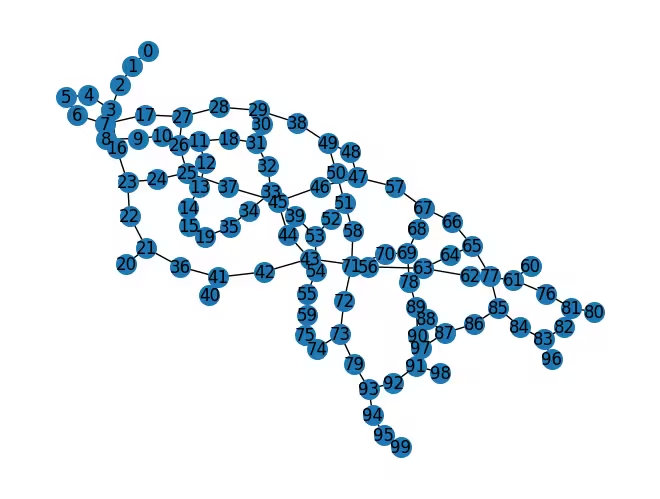
Il codice seguente dimostra come utilizzare il SATMapper di Matsuo et al. per rimappare il grafo. Questo processo consente di mappare il problema su uno stato iniziale più ottimale per una strategia SWAP specificata, ottenendo una riduzione significativa del numero di strati SWAP necessari per eseguire il circuito.
In SATMapper, il problema di trovare un buon mapping iniziale è formulato come un problema SAT. Un risolutore SAT viene utilizzato per trovare tale mapping iniziale per il circuito QAOA. python-sat (pysat in breve) è una libreria Python per un risolutore SAT, e la utilizzeremo per risolvere il problema SAT in questo esempio.
"""A class to solve the SWAP gate insertion initial mapping problem
using the SAT approach from https://arxiv.org/abs/2212.05666.
"""

@dataclass
class SATResult:
    """A data class to hold the result of a SAT solver."""

    satisfiable: bool  # Satisfiable is True if the SAT model could be solved
    # in a given time.
    solution: dict  # The solution to the SAT problem if it is satisfiable.
    mapping: list  # The mapping of nodes in the pattern graph to nodes in the
    # target graph.
    elapsed_time: float  # The time it took to solve the SAT model.

class SATMapper:
    r"""A class to introduce a SAT-approach to solve
    the initial mapping problem in SWAP gate insertion for commuting gates.

    When this pass is run on a DAG it will look for the first instance of
    :class:`.Commuting2qBlock` and use the program graph :math:`P` of this block
    of gates to find a layout for a given swap strategy. This layout is found
    with a binary search over the layers :math:`l` of the swap strategy. At each
    considered layer a subgraph isomorphism problem formulated as a SAT is solved
    by a SAT solver. Each instance is whether it is possible to embed the program
    graph :math:`P` into the effective connectivity graph :math:`C_l` that is
    achieved by applying :math:`l` layers of the swap strategy to the coupling map
    :math:`C_0` of the backend. Since solving SAT problems can be hard, a
    ``time_out`` fixes the maximum time allotted to the SAT solver for each
    instance. If this time is exceeded the considered problem is deemed
    unsatisfiable and the binary search proceeds to the next number of swap
    layers :math:``l``.
    """

    def __init__(self, timeout: int = 60):
        """Initialize the SATMapping.

        Args:
            timeout: The allowed time in seconds for each iteration of the SAT
                solver. This variable defaults to 60 seconds.
        """
        self.timeout = timeout

    def find_initial_mappings(
        self,
        program_graph: rx.PyGraph,
        swap_strategy: SwapStrategy,
        min_layers: int | None = None,
        max_layers: int | None = None,
    ) -> dict[int, SATResult]:
        r"""Find an initial mapping for a given swap strategy. Perform a
        binary search over the number of swap layers, and for each number
        of swap layers solve a subgraph isomorphism problem formulated as
        a SAT problem.

        Args:
            program_graph (rx.PyGraph): The program graph with commuting gates, where
                                        each edge represents a two-qubit gate.
            swap_strategy (SwapStrategy): The swap strategy to use to find the
                                        initial mapping.
            min_layers (int): The minimum number of swap layers to consider.
                                        Defaults to the maximum degree of the
                                        program graph - 2.
            max_layers (int): The maximum number of swap layers to consider.
                                        Defaults to the number of qubits in the
                                        swap strategy - 2.

        Returns:
            dict[int, SATResult]: A dictionary containing the results of the SAT
                                    solver for each number of swap layers.
        """
        num_nodes_g1 = len(program_graph.nodes())
        num_nodes_g2 = swap_strategy.distance_matrix.shape[0]
        if num_nodes_g1 > num_nodes_g2:
            return SATResult(False, [], [], 0)
        if min_layers is None:
            # use the maximum degree of the program graph - 2
            # as the lower bound.
            min_layers = max((d for _, d in program_graph.degree)) - 2
        if max_layers is None:
            max_layers = num_nodes_g2 - 1

        variable_pool = IDPool(start_from=1)
        variables = np.array(
            [
                [variable_pool.id(f"v_{i}_{j}") for j in range(num_nodes_g2)]
                for i in range(num_nodes_g1)
            ],
            dtype=int,
        )
        vid2mapping = {v: idx for idx, v in np.ndenumerate(variables)}
        binary_search_results = {}

        def interrupt(solver):
            # This function is called to interrupt the solver when the
            # timeout is reached.
            solver.interrupt()

        # Make a cnf (conjunctive normal form) for the one-to-one
        # mapping constraint
        cnf1 = []
        for i in range(num_nodes_g1):
            clause = variables[i, :].tolist()
            cnf1.append(clause)
            for k, m in combinations(clause, 2):
                cnf1.append([-1 * k, -1 * m])
        for j in range(num_nodes_g2):
            clause = variables[:, j].tolist()
            for k, m in combinations(clause, 2):
                cnf1.append([-1 * k, -1 * m])

        # Perform a binary search over the number of swap layers to find the
        # minimum number of swap layers that satisfies the subgraph isomorphism
        # problem.
        while min_layers < max_layers:
            num_layers = (min_layers + max_layers) // 2

            # Create the connectivity matrix. Note that if the swap strategy
            # cannot reach full connectivity then its distance matrix will have
            # entries with -1. These entries must be treated as False.
            d_matrix = swap_strategy.distance_matrix
            connectivity_matrix = (
                (-1 < d_matrix) & (d_matrix <= num_layers)
            ).astype(int)
            # Make a cnf for the adjacency constraint
            cnf2 = []
            for e_0, e_1 in list(program_graph.edge_list()):
                clause_matrix = np.multiply(
                    connectivity_matrix, variables[e_1, :]
                )
                clause = np.concatenate(
                    (
                        [[-variables[e_0, i]] for i in range(num_nodes_g2)],
                        clause_matrix,
                    ),
                    axis=1,
                )
                # Remove 0s from each clause
                cnf2.extend([c[c != 0].tolist() for c in clause])

            cnf = CNF(from_clauses=cnf1 + cnf2)

            with Solver(bootstrap_with=cnf, use_timer=True) as solver:
                # Solve the SAT problem with a timeout.
                # Timer is used to interrupt the solver when the
                # timeout is reached.
                timer = Timer(self.timeout, interrupt, [solver])
                timer.start()
                status = solver.solve_limited(expect_interrupt=True)
                timer.cancel()
                # Get the solution and the elapsed time.
                sol = solver.get_model()
                e_time = solver.time()

                print(
                    f"Layers: {num_layers}, Status: {status}, Time: {e_time}"
                )
                if status:
                    # If the SAT problem is satisfiable, convert the solution
                    # to a mapping.
                    mapping = [vid2mapping[idx] for idx in sol if idx > 0]
                    binary_search_results[num_layers] = SATResult(
                        status, sol, mapping, e_time
                    )
                    max_layers = num_layers
                else:
                    # If the SAT problem is unsatisfiable, return the last
                    # satisfiable solution.
                    binary_search_results[num_layers] = SATResult(
                        status, sol, [], e_time
                    )
                    min_layers = num_layers + 1

        return binary_search_results

    def remap_graph_with_sat(
        self, graph: rx.PyGraph, swap_strategy, max_layers
    ):
        """Applies the SAT mapping.

        Args:
            graph (nx.Graph): The graph to remap.
            swap_strategy (SwapStrategy): The swap strategy to use
                                            to find the initial mapping.

        Returns:
            tuple: A tuple containing the remapped graph, the edge map, and the
            number of layers of the swap strategy that was used to find the
            initial mapping. If no solution is found then the tuple contains
            None for each element. Note the returned edge map `{k: v}` means that
            node `k` in the original graph gets mapped to node `v` in the
            Pauli strings.
        """
        num_nodes = len(graph.nodes())
        results = self.find_initial_mappings(
            graph, swap_strategy, 0, max_layers
        )
        solutions = [k for k, v in results.items() if v.satisfiable]

        if len(solutions):
            min_k = min(solutions)
            edge_map = dict(results[min_k].mapping)
            # Create the remapped graph
            remapped_graph = rx.PyGraph()
            remapped_graph.add_nodes_from(range(num_nodes))
            mapping = dict(results[min_k].mapping)
            for i, graph_edge in enumerate(list(graph.edge_list())):
                remapped_edge = tuple(mapping[node] for node in graph_edge)
                remapped_graph.add_edge(*remapped_edge, graph.edges()[i])
            return remapped_graph, edge_map, min_k
        else:
            return None, None, None
sm = SATMapper(timeout=10)
remapped_graph, edge_map, min_swap_layers = sm.remap_graph_with_sat(
    graph=graph_100, swap_strategy=swap_strategy, max_layers=1
)
print("Map from old to new nodes: ", edge_map)
print("Min SWAP layers:", min_swap_layers)
draw_graph(remapped_graph, node_size=200, with_labels=True, width=1)
Layers: 0, Status: True, Time: 0.022812999999999306
Map from old to new nodes:  {0: 0, 1: 1, 2: 2, 3: 3, 4: 4, 5: 5, 6: 6, 7: 7, 8: 8, 9: 9, 10: 10, 11: 11, 12: 12, 13: 13, 14: 14, 15: 15, 16: 16, 17: 17, 18: 18, 19: 19, 20: 20, 21: 21, 22: 22, 23: 23, 24: 24, 25: 25, 26: 26, 27: 27, 28: 28, 29: 29, 30: 30, 31: 31, 32: 32, 33: 33, 34: 34, 35: 35, 36: 36, 37: 37, 38: 38, 39: 39, 40: 40, 41: 41, 42: 42, 43: 43, 44: 44, 45: 45, 46: 46, 47: 47, 48: 48, 49: 49, 50: 50, 51: 51, 52: 52, 53: 53, 54: 54, 55: 55, 56: 56, 57: 57, 58: 58, 59: 59, 60: 60, 61: 61, 62: 62, 63: 63, 64: 64, 65: 65, 66: 66, 67: 67, 68: 68, 69: 69, 70: 70, 71: 71, 72: 72, 73: 73, 74: 74, 75: 75, 76: 76, 77: 77, 78: 78, 79: 79, 80: 80, 81: 81, 82: 82, 83: 83, 84: 84, 85: 85, 86: 86, 87: 87, 88: 88, 89: 89, 90: 90, 91: 91, 92: 92, 93: 93, 94: 94, 95: 95, 96: 96, 97: 97, 98: 98, 99: 99}
Min SWAP layers: 0
remapped_max_cut_paulis = build_max_cut_paulis(remapped_graph)
# define a qiskit SparsePauliOp from the list of paulis
remapped_cost_operator = SparsePauliOp.from_list(remapped_max_cut_paulis)
print(remapped_cost_operator)
SparsePauliOp(['IIIIIIIIIIIIIIIIIIIIIIIIIIIIIIIIIIIIIIIIIIIIIIIIIIIIIIIIIIIIIIIIIIIIIIIIIIIIIIIIIIIIIIIIIIIIIIIIIIZZ', 'IIIIIIIIIIIIIIIIIIIIIIIIIIIIIIIIIIIIIIIIIIIIIIIIIIIIIIIIIIIIIIIIIIIIIIIIIIIIIIIIIIIIIIIIIIIIIIIIIZZI', 'IIIIIIIIIIIIIIIIIIIIIIIIIIIIIIIIIIIIIIIIIIIIIIIIIIIIIIIIIIIIIIIIIIIIIIIIIIIIIIIIIIIIIIIIIIIIIIIIZZII', 'IIIIIIIIIIIIIIIIIIIIIIIIIIIIIIIIIIIIIIIIIIIIIIIIIIIIIIIIIIIIIIIIIIIIIIIIIIIIIIIIIIIIIIIIIIIIIIIZZIII', 'IIIIIIIIIIIIIIIIIIIIIIIIIIIIIIIIIIIIIIIIIIIIIIIIIIIIIIIIIIIIIIIIIIIIIIIIIIIIIIIIIIIZIIIIIIIIIIIIZIII', 'IIIIIIIIIIIIIIIIIIIIIIIIIIIIIIIIIIIIIIIIIIIIIIIIIIIIIIIIIIIIIIIIIIIIIIIIIIIIIIIIIIIIIIIIIIIIIIZZIIII', 'IIIIIIIIIIIIIIIIIIIIIIIIIIIIIIIIIIIIIIIIIIIIIIIIIIIIIIIIIIIIIIIIIIIIIIIIIIIIIIIIIIIIIIIIIIIIIZZIIIII', 'IIIIIIIIIIIIIIIIIIIIIIIIIIIIIIIIIIIIIIIIIIIIIIIIIIIIIIIIIIIIIIIIIIIIIIIIIIIIIIIIIIIIIIIIIIIIZZIIIIII', 'IIIIIIIIIIIIIIIIIIIIIIIIIIIIIIIIIIIIIIIIIIIIIIIIIIIIIIIIIIIIIIIIIIIIIIIIIIIIIIIIIIIIIIIIIIIZZIIIIIII', 'IIIIIIIIIIIIIIIIIIIIIIIIIIIIIIIIIIIIIIIIIIIIIIIIIIIIIIIIIIIIIIIIIIIIIIIIIIIIIIIIIIZIIIIIIIIIZIIIIIII', 'IIIIIIIIIIIIIIIIIIIIIIIIIIIIIIIIIIIIIIIIIIIIIIIIIIIIIIIIIIIIIIIIIIIIIIIIIIIIIIIIIIIIIIIIIIZZIIIIIIII', 'IIIIIIIIIIIIIIIIIIIIIIIIIIIIIIIIIIIIIIIIIIIIIIIIIIIIIIIIIIIIIIIIIIIIIIIIIIIIIIIIIIIIIIIIIZZIIIIIIIII', 'IIIIIIIIIIIIIIIIIIIIIIIIIIIIIIIIIIIIIIIIIIIIIIIIIIIIIIIIIIIIIIIIIIIIIIIIIIIIIIIIIIIIIIIIZZIIIIIIIIII', 'IIIIIIIIIIIIIIIIIIIIIIIIIIIIIIIIIIIIIIIIIIIIIIIIIIIIIIIIIIIIIIIIIIIIIIIIIIIIIIIIIIIIIIIZZIIIIIIIIIII', 'IIIIIIIIIIIIIIIIIIIIIIIIIIIIIIIIIIIIIIIIIIIIIIIIIIIIIIIIIIIIIIIIIIIIIIIIIIIIIIIIIZIIIIIIZIIIIIIIIIII', 'IIIIIIIIIIIIIIIIIIIIIIIIIIIIIIIIIIIIIIIIIIIIIIIIIIIIIIIIIIIIIIIIIIIIIIIIIIIIIIIIIIIIIIZZIIIIIIIIIIII', 'IIIIIIIIIIIIIIIIIIIIIIIIIIIIIIIIIIIIIIIIIIIIIIIIIIIIIIIIIIIIIIIIIIIIIIIIIIIIIIIIIIIIIZZIIIIIIIIIIIII', 'IIIIIIIIIIIIIIIIIIIIIIIIIIIIIIIIIIIIIIIIIIIIIIIIIIIIIIIIIIIIIIIIIIIIIIIIIIIIIIIIIIIIZZIIIIIIIIIIIIII', 'IIIIIIIIIIIIIIIIIIIIIIIIIIIIIIIIIIIIIIIIIIIIIIIIIIIIIIIIIIIIIIIIIIIIIIIIIIIIIIIIZIIIZIIIIIIIIIIIIIII', 'IIIIIIIIIIIIIIIIIIIIIIIIIIIIIIIIIIIIIIIIIIIIIIIIIIIIIIIIIIIIIIIIIIIIIIIIIIIIZIIIIIIZIIIIIIIIIIIIIIII', 'IIIIIIIIIIIIIIIIIIIIIIIIIIIIIIIIIIIIIIIIIIIIIIIIIIIIIIIIIIIIIIIIIIIIIIIIZIIIIIIIIIZIIIIIIIIIIIIIIIII', 'IIIIIIIIIIIIIIIIIIIIIIIIIIIIIIIIIIIIIIIIIIIIIIIIIIIIIIIIIIIIIIIIIIIIZIIIIIIIIIIIIZIIIIIIIIIIIIIIIIII', 'IIIIIIIIIIIIIIIIIIIIIIIIIIIIIIIIIIIIIIIIIIIIIIIIIIIIIIIIIIIIIIIIZIIIIIIIIIIIIIIIZIIIIIIIIIIIIIIIIIII', 'IIIIIIIIIIIIIIIIIIIIIIIIIIIIIIIIIIIIIIIIIIIIIIIIIIIIIIIIIIIIIIIIIIIIIIIIIIIIIIZZIIIIIIIIIIIIIIIIIIII', 'IIIIIIIIIIIIIIIIIIIIIIIIIIIIIIIIIIIIIIIIIIIIIIIIIIIIIIIIIIIIIIIIIIIIIIIIIIIIIZZIIIIIIIIIIIIIIIIIIIII', 'IIIIIIIIIIIIIIIIIIIIIIIIIIIIIIIIIIIIIIIIIIIIIIIIIIIIIIIIIIIIIIIZIIIIIIIIIIIIIIZIIIIIIIIIIIIIIIIIIIII', 'IIIIIIIIIIIIIIIIIIIIIIIIIIIIIIIIIIIIIIIIIIIIIIIIIIIIIIIIIIIIIIIIIIIIIIIIIIIIZZIIIIIIIIIIIIIIIIIIIIII', 'IIIIIIIIIIIIIIIIIIIIIIIIIIIIIIIIIIIIIIIIIIIIIIIIIIIIIIIIIIIIIIIIIIIIIIIIIIIZZIIIIIIIIIIIIIIIIIIIIIII', 'IIIIIIIIIIIIIIIIIIIIIIIIIIIIIIIIIIIIIIIIIIIIIIIIIIIIIIIIIIIIIIIIIIIIIIIIIIZZIIIIIIIIIIIIIIIIIIIIIIII', 'IIIIIIIIIIIIIIIIIIIIIIIIIIIIIIIIIIIIIIIIIIIIIIIIIIIIIIIIIIIIIIIIIIIIIIIIIZZIIIIIIIIIIIIIIIIIIIIIIIII', 'IIIIIIIIIIIIIIIIIIIIIIIIIIIIIIIIIIIIIIIIIIIIIIIIIIIIIIIIIIIIIIZIIIIIIIIIIIZIIIIIIIIIIIIIIIIIIIIIIIII', 'IIIIIIIIIIIIIIIIIIIIIIIIIIIIIIIIIIIIIIIIIIIIIIIIIIIIIIIIIIIIIIIIIIIIIIIIZZIIIIIIIIIIIIIIIIIIIIIIIIII', 'IIIIIIIIIIIIIIIIIIIIIIIIIIIIIIIIIIIIIIIIIIIIIIIIIIIIIIIIIIIIIIIIIIIIIIIZZIIIIIIIIIIIIIIIIIIIIIIIIIII', 'IIIIIIIIIIIIIIIIIIIIIIIIIIIIIIIIIIIIIIIIIIIIIIIIIIIIIIIIIIIIIIIIIIIIIIZZIIIIIIIIIIIIIIIIIIIIIIIIIIII', 'IIIIIIIIIIIIIIIIIIIIIIIIIIIIIIIIIIIIIIIIIIIIIIIIIIIIIIIIIIIIIIIIIIIIIZZIIIIIIIIIIIIIIIIIIIIIIIIIIIII', 'IIIIIIIIIIIIIIIIIIIIIIIIIIIIIIIIIIIIIIIIIIIIIIIIIIIIIIIIIIIIIZIIIIIIIIZIIIIIIIIIIIIIIIIIIIIIIIIIIIII', 'IIIIIIIIIIIIIIIIIIIIIIIIIIIIIIIIIIIIIIIIIIIIIIIIIIIIIIIIIIIIIIIIIIIIZZIIIIIIIIIIIIIIIIIIIIIIIIIIIIII', 'IIIIIIIIIIIIIIIIIIIIIIIIIIIIIIIIIIIIIIIIIIIIIIIIIIIIIIIIIIIIIIIIIIIZZIIIIIIIIIIIIIIIIIIIIIIIIIIIIIII', 'IIIIIIIIIIIIIIIIIIIIIIIIIIIIIIIIIIIIIIIIIIIIIIIIIIIIIIIIIIIIIIIIIIZZIIIIIIIIIIIIIIIIIIIIIIIIIIIIIIII', 'IIIIIIIIIIIIIIIIIIIIIIIIIIIIIIIIIIIIIIIIIIIIIIIIIIIIIIIIIIIIIIIIIZZIIIIIIIIIIIIIIIIIIIIIIIIIIIIIIIII', 'IIIIIIIIIIIIIIIIIIIIIIIIIIIIIIIIIIIIIIIIIIIIIIIIIIIIIIIIIIIIZIIIIIZIIIIIIIIIIIIIIIIIIIIIIIIIIIIIIIII', 'IIIIIIIIIIIIIIIIIIIIIIIIIIIIIIIIIIIIIIIIIIIIIIIIIIIIIIIIIIIIIIIIZZIIIIIIIIIIIIIIIIIIIIIIIIIIIIIIIIII', 'IIIIIIIIIIIIIIIIIIIIIIIIIIIIIIIIIIIIIIIIIIIIIIIIIIIIIIIIIIZIIIIZIIIIIIIIIIIIIIIIIIIIIIIIIIIIIIIIIIII', 'IIIIIIIIIIIIIIIIIIIIIIIIIIIIIIIIIIIIIIIIIIIIIIIIIIIIIIZIIIIIIIZIIIIIIIIIIIIIIIIIIIIIIIIIIIIIIIIIIIII', 'IIIIIIIIIIIIIIIIIIIIIIIIIIIIIIIIIIIIIIIIIIIIIIIIIIZIIIIIIIIIIZIIIIIIIIIIIIIIIIIIIIIIIIIIIIIIIIIIIIII', 'IIIIIIIIIIIIIIIIIIIIIIIIIIIIIIIIIIIIIIIIIIIIIIZIIIIIIIIIIIIIZIIIIIIIIIIIIIIIIIIIIIIIIIIIIIIIIIIIIIII', 'IIIIIIIIIIIIIIIIIIIIIIIIIIIIIIIIIIIIIIIIIIIIIIIIIIIIIIIIIIZZIIIIIIIIIIIIIIIIIIIIIIIIIIIIIIIIIIIIIIII', 'IIIIIIIIIIIIIIIIIIIIIIIIIIIIIIIIIIIIIIIIIIIIIIIIIIIIIIIIIZZIIIIIIIIIIIIIIIIIIIIIIIIIIIIIIIIIIIIIIIII', 'IIIIIIIIIIIIIIIIIIIIIIIIIIIIIIIIIIIIIIIIIIIIIIIIIIIIIIIIZZIIIIIIIIIIIIIIIIIIIIIIIIIIIIIIIIIIIIIIIIII', 'IIIIIIIIIIIIIIIIIIIIIIIIIIIIIIIIIIIIIIIIIIIIIIIIIIIIIIIZZIIIIIIIIIIIIIIIIIIIIIIIIIIIIIIIIIIIIIIIIIII', 'IIIIIIIIIIIIIIIIIIIIIIIIIIIIIIIIIIIIIIIIIIIZIIIIIIIIIIIIZIIIIIIIIIIIIIIIIIIIIIIIIIIIIIIIIIIIIIIIIIII', 'IIIIIIIIIIIIIIIIIIIIIIIIIIIIIIIIIIIIIIIIIIIIIIIIIIIIIIZZIIIIIIIIIIIIIIIIIIIIIIIIIIIIIIIIIIIIIIIIIIII', 'IIIIIIIIIIIIIIIIIIIIIIIIIIIIIIIIIIIIIIIIIIIIIIIIIIIIIZZIIIIIIIIIIIIIIIIIIIIIIIIIIIIIIIIIIIIIIIIIIIII', 'IIIIIIIIIIIIIIIIIIIIIIIIIIIIIIIIIIIIIIIIIIIIIIIIIIIIZZIIIIIIIIIIIIIIIIIIIIIIIIIIIIIIIIIIIIIIIIIIIIII', 'IIIIIIIIIIIIIIIIIIIIIIIIIIIIIIIIIIIIIIIIIIIIIIIIIIIZZIIIIIIIIIIIIIIIIIIIIIIIIIIIIIIIIIIIIIIIIIIIIIII', 'IIIIIIIIIIIIIIIIIIIIIIIIIIIIIIIIIIIIIIIIIIZIIIIIIIIIZIIIIIIIIIIIIIIIIIIIIIIIIIIIIIIIIIIIIIIIIIIIIIII', 'IIIIIIIIIIIIIIIIIIIIIIIIIIIIIIIIIIIIIIIIIIIIIIIIIIZZIIIIIIIIIIIIIIIIIIIIIIIIIIIIIIIIIIIIIIIIIIIIIIII', 'IIIIIIIIIIIIIIIIIIIIIIIIIIIIIIIIIIIIIIIIIIIIIIIIIZZIIIIIIIIIIIIIIIIIIIIIIIIIIIIIIIIIIIIIIIIIIIIIIIII', 'IIIIIIIIIIIIIIIIIIIIIIIIIIIIIIIIIIIIIIIIIIIIIIIIZZIIIIIIIIIIIIIIIIIIIIIIIIIIIIIIIIIIIIIIIIIIIIIIIIII', 'IIIIIIIIIIIIIIIIIIIIIIIIIIIIIIIIIIIIIIIIIIIIIIIZZIIIIIIIIIIIIIIIIIIIIIIIIIIIIIIIIIIIIIIIIIIIIIIIIIII', 'IIIIIIIIIIIIIIIIIIIIIIIIIIIIIIIIIIIIIIIIIZIIIIIIZIIIIIIIIIIIIIIIIIIIIIIIIIIIIIIIIIIIIIIIIIIIIIIIIIII', 'IIIIIIIIIIIIIIIIIIIIIIIIIIIIIIIIIIIIIIIIIIIIIIZZIIIIIIIIIIIIIIIIIIIIIIIIIIIIIIIIIIIIIIIIIIIIIIIIIIII', 'IIIIIIIIIIIIIIIIIIIIIIIIIIIIIIIIIIIIIIIIIIIIIZZIIIIIIIIIIIIIIIIIIIIIIIIIIIIIIIIIIIIIIIIIIIIIIIIIIIII', 'IIIIIIIIIIIIIIIIIIIIIIIIIIIIIIIIIIIIIIIIIIIIZZIIIIIIIIIIIIIIIIIIIIIIIIIIIIIIIIIIIIIIIIIIIIIIIIIIIIII', 'IIIIIIIIIIIIIIIIIIIIIIIIIIIIIIIIIIIIIIIIZIIIZIIIIIIIIIIIIIIIIIIIIIIIIIIIIIIIIIIIIIIIIIIIIIIIIIIIIIII', 'IIIIIIIIIIIIIIIIIIIIIIIIIIIIIIIIIIIIZIIIIIIZIIIIIIIIIIIIIIIIIIIIIIIIIIIIIIIIIIIIIIIIIIIIIIIIIIIIIIII', 'IIIIIIIIIIIIIIIIIIIIIIIIIIIIIIIIZIIIIIIIIIZIIIIIIIIIIIIIIIIIIIIIIIIIIIIIIIIIIIIIIIIIIIIIIIIIIIIIIIII', 'IIIIIIIIIIIIIIIIIIIIIIIIIIIIZIIIIIIIIIIIIZIIIIIIIIIIIIIIIIIIIIIIIIIIIIIIIIIIIIIIIIIIIIIIIIIIIIIIIIII', 'IIIIIIIIIIIIIIIIIIIIIIIIZIIIIIIIIIIIIIIIZIIIIIIIIIIIIIIIIIIIIIIIIIIIIIIIIIIIIIIIIIIIIIIIIIIIIIIIIIII', 'IIIIIIIIIIIIIIIIIIIIIIIIIIIIIIIIIIIIIIZZIIIIIIIIIIIIIIIIIIIIIIIIIIIIIIIIIIIIIIIIIIIIIIIIIIIIIIIIIIII', 'IIIIIIIIIIIIIIIIIIIIIIIIIIIIIIIIIIIIIZZIIIIIIIIIIIIIIIIIIIIIIIIIIIIIIIIIIIIIIIIIIIIIIIIIIIIIIIIIIIII', 'IIIIIIIIIIIIIIIIIIIIIIIZIIIIIIIIIIIIIIZIIIIIIIIIIIIIIIIIIIIIIIIIIIIIIIIIIIIIIIIIIIIIIIIIIIIIIIIIIIII', 'IIIIIIIIIIIIIIIIIIIIIIIIIIIIIIIIIIIIZZIIIIIIIIIIIIIIIIIIIIIIIIIIIIIIIIIIIIIIIIIIIIIIIIIIIIIIIIIIIIII', 'IIIIIIIIIIIIIIIIIIIIIIIIIIIIIIIIIIIZZIIIIIIIIIIIIIIIIIIIIIIIIIIIIIIIIIIIIIIIIIIIIIIIIIIIIIIIIIIIIIII', 'IIIIIIIIIIIIIIIIIIIIIIIIIIIIIIIIIIZZIIIIIIIIIIIIIIIIIIIIIIIIIIIIIIIIIIIIIIIIIIIIIIIIIIIIIIIIIIIIIIII', 'IIIIIIIIIIIIIIIIIIIIIIIIIIIIIIIIIZZIIIIIIIIIIIIIIIIIIIIIIIIIIIIIIIIIIIIIIIIIIIIIIIIIIIIIIIIIIIIIIIII', 'IIIIIIIIIIIIIIIIIIIIIIZIIIIIIIIIIIZIIIIIIIIIIIIIIIIIIIIIIIIIIIIIIIIIIIIIIIIIIIIIIIIIIIIIIIIIIIIIIIII', 'IIIIIIIIIIIIIIIIIIIIIIIIIIIIIIIIZZIIIIIIIIIIIIIIIIIIIIIIIIIIIIIIIIIIIIIIIIIIIIIIIIIIIIIIIIIIIIIIIIII', 'IIIIIIIIIIIIIIIIIIIIIIIIIIIIIIIZZIIIIIIIIIIIIIIIIIIIIIIIIIIIIIIIIIIIIIIIIIIIIIIIIIIIIIIIIIIIIIIIIIII', 'IIIIIIIIIIIIIIIIIIIIIIIIIIIIIIZZIIIIIIIIIIIIIIIIIIIIIIIIIIIIIIIIIIIIIIIIIIIIIIIIIIIIIIIIIIIIIIIIIIII', 'IIIIIIIIIIIIIIIIIIIIIIIIIIIIIZZIIIIIIIIIIIIIIIIIIIIIIIIIIIIIIIIIIIIIIIIIIIIIIIIIIIIIIIIIIIIIIIIIIIII', 'IIIIIIIIIIIIIIIIIIIIIZIIIIIIIIZIIIIIIIIIIIIIIIIIIIIIIIIIIIIIIIIIIIIIIIIIIIIIIIIIIIIIIIIIIIIIIIIIIIII', 'IIIIIIIIIIIIIIIIIIIIIIIIIIIIZZIIIIIIIIIIIIIIIIIIIIIIIIIIIIIIIIIIIIIIIIIIIIIIIIIIIIIIIIIIIIIIIIIIIIII', 'IIIIIIIIIIIIIIIIIIIIIIIIIIIZZIIIIIIIIIIIIIIIIIIIIIIIIIIIIIIIIIIIIIIIIIIIIIIIIIIIIIIIIIIIIIIIIIIIIIII', 'IIIIIIIIIIIIIIIIIIIIIIIIIIZZIIIIIIIIIIIIIIIIIIIIIIIIIIIIIIIIIIIIIIIIIIIIIIIIIIIIIIIIIIIIIIIIIIIIIIII', 'IIIIIIIIIIIIIIIIIIIIIIIIIZZIIIIIIIIIIIIIIIIIIIIIIIIIIIIIIIIIIIIIIIIIIIIIIIIIIIIIIIIIIIIIIIIIIIIIIIII', 'IIIIIIIIIIIIIIIIIIIIZIIIIIZIIIIIIIIIIIIIIIIIIIIIIIIIIIIIIIIIIIIIIIIIIIIIIIIIIIIIIIIIIIIIIIIIIIIIIIII', 'IIIIIIIIIIIIIIIIIIIIIIIIZZIIIIIIIIIIIIIIIIIIIIIIIIIIIIIIIIIIIIIIIIIIIIIIIIIIIIIIIIIIIIIIIIIIIIIIIIII', 'IIIIIIIIIIIIIIIIIIZIIIIZIIIIIIIIIIIIIIIIIIIIIIIIIIIIIIIIIIIIIIIIIIIIIIIIIIIIIIIIIIIIIIIIIIIIIIIIIIII', 'IIIIIIIIIIIIIIZIIIIIIIZIIIIIIIIIIIIIIIIIIIIIIIIIIIIIIIIIIIIIIIIIIIIIIIIIIIIIIIIIIIIIIIIIIIIIIIIIIIII', 'IIIIIIIIIIZIIIIIIIIIIZIIIIIIIIIIIIIIIIIIIIIIIIIIIIIIIIIIIIIIIIIIIIIIIIIIIIIIIIIIIIIIIIIIIIIIIIIIIIII', 'IIIIIIZIIIIIIIIIIIIIZIIIIIIIIIIIIIIIIIIIIIIIIIIIIIIIIIIIIIIIIIIIIIIIIIIIIIIIIIIIIIIIIIIIIIIIIIIIIIII', 'IIIIIIIIIIIIIIIIIIZZIIIIIIIIIIIIIIIIIIIIIIIIIIIIIIIIIIIIIIIIIIIIIIIIIIIIIIIIIIIIIIIIIIIIIIIIIIIIIIII', 'IIIIIIIIIIIIIIIIIZZIIIIIIIIIIIIIIIIIIIIIIIIIIIIIIIIIIIIIIIIIIIIIIIIIIIIIIIIIIIIIIIIIIIIIIIIIIIIIIIII', 'IIIIIIIIIIIIIIIIZZIIIIIIIIIIIIIIIIIIIIIIIIIIIIIIIIIIIIIIIIIIIIIIIIIIIIIIIIIIIIIIIIIIIIIIIIIIIIIIIIII', 'IIIIIIIIIIIIIIIZZIIIIIIIIIIIIIIIIIIIIIIIIIIIIIIIIIIIIIIIIIIIIIIIIIIIIIIIIIIIIIIIIIIIIIIIIIIIIIIIIIII', 'IIIZIIIIIIIIIIIIZIIIIIIIIIIIIIIIIIIIIIIIIIIIIIIIIIIIIIIIIIIIIIIIIIIIIIIIIIIIIIIIIIIIIIIIIIIIIIIIIIII', 'IIIIIIIIIIIIIIZZIIIIIIIIIIIIIIIIIIIIIIIIIIIIIIIIIIIIIIIIIIIIIIIIIIIIIIIIIIIIIIIIIIIIIIIIIIIIIIIIIIII', 'IIIIIIIIIIIIIZZIIIIIIIIIIIIIIIIIIIIIIIIIIIIIIIIIIIIIIIIIIIIIIIIIIIIIIIIIIIIIIIIIIIIIIIIIIIIIIIIIIIII', 'IIIIIIIIIIIIZZIIIIIIIIIIIIIIIIIIIIIIIIIIIIIIIIIIIIIIIIIIIIIIIIIIIIIIIIIIIIIIIIIIIIIIIIIIIIIIIIIIIIII', 'IIIIIIIIIIIZZIIIIIIIIIIIIIIIIIIIIIIIIIIIIIIIIIIIIIIIIIIIIIIIIIIIIIIIIIIIIIIIIIIIIIIIIIIIIIIIIIIIIIII', 'IIZIIIIIIIIIZIIIIIIIIIIIIIIIIIIIIIIIIIIIIIIIIIIIIIIIIIIIIIIIIIIIIIIIIIIIIIIIIIIIIIIIIIIIIIIIIIIIIIII', 'IIIIIIIIIIZZIIIIIIIIIIIIIIIIIIIIIIIIIIIIIIIIIIIIIIIIIIIIIIIIIIIIIIIIIIIIIIIIIIIIIIIIIIIIIIIIIIIIIIII', 'IIIIIIIIIZZIIIIIIIIIIIIIIIIIIIIIIIIIIIIIIIIIIIIIIIIIIIIIIIIIIIIIIIIIIIIIIIIIIIIIIIIIIIIIIIIIIIIIIIII', 'IIIIIIIIZZIIIIIIIIIIIIIIIIIIIIIIIIIIIIIIIIIIIIIIIIIIIIIIIIIIIIIIIIIIIIIIIIIIIIIIIIIIIIIIIIIIIIIIIIII', 'IIIIIIIZZIIIIIIIIIIIIIIIIIIIIIIIIIIIIIIIIIIIIIIIIIIIIIIIIIIIIIIIIIIIIIIIIIIIIIIIIIIIIIIIIIIIIIIIIIII', 'IZIIIIIIZIIIIIIIIIIIIIIIIIIIIIIIIIIIIIIIIIIIIIIIIIIIIIIIIIIIIIIIIIIIIIIIIIIIIIIIIIIIIIIIIIIIIIIIIIII', 'IIIIIIZZIIIIIIIIIIIIIIIIIIIIIIIIIIIIIIIIIIIIIIIIIIIIIIIIIIIIIIIIIIIIIIIIIIIIIIIIIIIIIIIIIIIIIIIIIIII', 'IIIIIZZIIIIIIIIIIIIIIIIIIIIIIIIIIIIIIIIIIIIIIIIIIIIIIIIIIIIIIIIIIIIIIIIIIIIIIIIIIIIIIIIIIIIIIIIIIIII', 'IIIIZZIIIIIIIIIIIIIIIIIIIIIIIIIIIIIIIIIIIIIIIIIIIIIIIIIIIIIIIIIIIIIIIIIIIIIIIIIIIIIIIIIIIIIIIIIIIIII', 'ZIIIZIIIIIIIIIIIIIIIIIIIIIIIIIIIIIIIIIIIIIIIIIIIIIIIIIIIIIIIIIIIIIIIIIIIIIIIIIIIIIIIIIIIIIIIIIIIIIII'],
              coeffs=[1.+0.j, 1.+0.j, 1.+0.j, 1.+0.j, 1.+0.j, 1.+0.j, 1.+0.j, 1.+0.j, 1.+0.j,
 1.+0.j, 1.+0.j, 1.+0.j, 1.+0.j, 1.+0.j, 1.+0.j, 1.+0.j, 1.+0.j, 1.+0.j,
 1.+0.j, 1.+0.j, 1.+0.j, 1.+0.j, 1.+0.j, 1.+0.j, 1.+0.j, 1.+0.j, 1.+0.j,
 1.+0.j, 1.+0.j, 1.+0.j, 1.+0.j, 1.+0.j, 1.+0.j, 1.+0.j, 1.+0.j, 1.+0.j,
 1.+0.j, 1.+0.j, 1.+0.j, 1.+0.j, 1.+0.j, 1.+0.j, 1.+0.j, 1.+0.j, 1.+0.j,
 1.+0.j, 1.+0.j, 1.+0.j, 1.+0.j, 1.+0.j, 1.+0.j, 1.+0.j, 1.+0.j, 1.+0.j,
 1.+0.j, 1.+0.j, 1.+0.j, 1.+0.j, 1.+0.j, 1.+0.j, 1.+0.j, 1.+0.j, 1.+0.j,
 1.+0.j, 1.+0.j, 1.+0.j, 1.+0.j, 1.+0.j, 1.+0.j, 1.+0.j, 1.+0.j, 1.+0.j,
 1.+0.j, 1.+0.j, 1.+0.j, 1.+0.j, 1.+0.j, 1.+0.j, 1.+0.j, 1.+0.j, 1.+0.j,
 1.+0.j, 1.+0.j, 1.+0.j, 1.+0.j, 1.+0.j, 1.+0.j, 1.+0.j, 1.+0.j, 1.+0.j,
 1.+0.j, 1.+0.j, 1.+0.j, 1.+0.j, 1.+0.j, 1.+0.j, 1.+0.j, 1.+0.j, 1.+0.j,
 1.+0.j, 1.+0.j, 1.+0.j, 1.+0.j, 1.+0.j, 1.+0.j, 1.+0.j, 1.+0.j, 1.+0.j,
 1.+0.j, 1.+0.j, 1.+0.j])
Costruire un circuito QAOA con la strategia SWAP e il mapping SAT
Vogliamo applicare le strategie SWAP solo allo strato dell'operatore di costo, quindi iniziamo creando il blocco isolato che in seguito trasformeremo e aggiungeremo al circuito QAOA finale.
Per questo, possiamo utilizzare la classe QAOAAnsatz di Qiskit. Inseriamo un circuito vuoto nei campi initial_state e mixer_operator per assicurarci di costruire uno strato isolato dell'operatore di costo.
Definiamo anche la mappa edge_coloring in modo che i gate RZZ siano posizionati accanto ai gate SWAP. Questo posizionamento strategico ci consente di sfruttare le cancellazioni CX, ottimizzando il circuito per prestazioni migliori.
Questo processo viene eseguito all'interno della funzione create_qaoa_swap_circuit.
def make_meas_map(circuit: QuantumCircuit) -> dict:
    """Return a mapping from qubit index (the key) to classical bit (the value).

    This allows us to account for the swapping order introduced by the
    SWAP strategy.
    """
    creg = circuit.cregs[0]
    qreg = circuit.qregs[0]

    meas_map = {}
    for inst in circuit.data:
        if inst.operation.name == "measure":
            meas_map[qreg.index(inst.qubits[0])] = creg.index(inst.clbits[0])

    return meas_map

def apply_swap_strategy(
    circuit: QuantumCircuit,
    swap_strategy: SwapStrategy,
    edge_coloring: dict[tuple[int, int], int] | None = None,
) -> QuantumCircuit:
    """Transpile with a SWAP strategy.

    Returns:
        A quantum circuit transpiled with the given swap strategy.
    """

    pm_pre = PassManager(
        [
            FindCommutingPauliEvolutions(),
            Commuting2qGateRouter(
                swap_strategy,
                edge_coloring,
            ),
        ]
    )
    return pm_pre.run(circuit)

def apply_qaoa_layers(
    cost_layer: QuantumCircuit,
    meas_map: dict,
    num_layers: int,
    gamma: list[float] | ParameterVector = None,
    beta: list[float] | ParameterVector = None,
    initial_state: QuantumCircuit = None,
    mixer: QuantumCircuit = None,
):
    """Applies QAOA layers to construct circuit.

    First, the initial state is applied. If `initial_state` is None, we begin in
    the initial superposition state. Next, we alternate between layers of the
    cost operator and the mixer. The cost operator is alternatively applied in
    order and in reverse instruction order. This allows us to apply the swap
    strategy on odd `p` layers and undo the swap strategy on even `p` layers.
    """

    num_qubits = cost_layer.num_qubits
    new_circuit = QuantumCircuit(num_qubits, num_qubits)

    if initial_state is not None:
        new_circuit.append(initial_state, range(num_qubits))
    else:
        # all h state by default
        new_circuit.h(range(num_qubits))

    if gamma is None or beta is None:
        gamma = ParameterVector("γ'", num_layers)
        if mixer is None or mixer.num_parameters == 0:
            beta = ParameterVector("β'", num_layers)
        else:
            beta = ParameterVector("β'", num_layers * mixer.num_parameters)

    if mixer is not None:
        mixer_layer = mixer
    else:
        mixer_layer = QuantumCircuit(num_qubits)
        mixer_layer.rx(-2 * beta[0], range(num_qubits))

    for layer in range(num_layers):
        bind_dict = {cost_layer.parameters[0]: gamma[layer]}
        cost_layer_ = cost_layer.assign_parameters(bind_dict)
        bind_dict = {
            mixer_layer.parameters[i]: beta[layer + i]
            for i in range(mixer_layer.num_parameters)
        }
        layer_mixer = mixer_layer.assign_parameters(bind_dict)

        if layer % 2 == 0:
            new_circuit.append(cost_layer_, range(num_qubits))
        else:
            new_circuit.append(cost_layer_.reverse_ops(), range(num_qubits))

        new_circuit.append(layer_mixer, range(num_qubits))

    for qidx, cidx in meas_map.items():
        new_circuit.measure(qidx, cidx)

    return new_circuit

def create_qaoa_swap_circuit(
    cost_operator: SparsePauliOp,
    swap_strategy: SwapStrategy,
    edge_coloring: dict = None,
    theta: list[float] = None,
    qaoa_layers: int = 1,
    initial_state: QuantumCircuit = None,
    mixer: QuantumCircuit = None,
):
    """Create the circuit for QAOA.

    Notes: This circuit construction for QAOA works for quadratic terms in `Z`
    and will be extended to first-order terms in `Z`.
    Higher-orders are not supported.

    Args:
        cost_operator: the cost operator.
        swap_strategy: selected swap strategy
        edge_coloring: A coloring of edges that should correspond to the
            coupling map of the hardware. It defines the order in which
            we apply the Rzz gates. This allows us to choose an ordering
            such that `Rzz` gates will immediately precede SWAP gates
            to leverage CNOT cancellation.
        theta: The QAOA angles.
        qaoa_layers: The number of layers of the cost operator and the
        mixer operator.
        initial_state: The initial state on which we apply layers of
            cost operator and mixer.
        mixer: The QAOA mixer. It will be applied as is onto the QAOA
            circuit. Therefore, its output must have the same ordering
            of qubits as its input.
    """

    num_qubits = cost_operator.num_qubits

    if theta is not None:
        gamma = theta[: len(theta) // 2]
        beta = theta[len(theta) // 2 :]
        qaoa_layers = len(theta) // 2
    else:
        gamma = beta = None

    # First, create the ansatz of one layer of QAOA without mixer
    cost_layer = QAOAAnsatz(
        cost_operator,
        reps=1,
        initial_state=QuantumCircuit(num_qubits),
        mixer_operator=QuantumCircuit(num_qubits),
    ).decompose()

    # This will allow us to recover the permutation of the measurements
    # that the swaps introduce.
    cost_layer.measure_all()

    # Now, apply the swap strategy for commuting gates
    cost_layer = apply_swap_strategy(cost_layer, swap_strategy, edge_coloring)

    # Compute the measurement map (qubit to classical bit).
    # We will apply this for odd layers where the swaps were inserted.
    if qaoa_layers % 2 == 1:
        meas_map = make_meas_map(cost_layer)
    else:
        meas_map = {idx: idx for idx in range(num_qubits)}

    cost_layer.remove_final_measurements()

    # Finally, introduce the mixer circuit and add measurements
    # following measurement map
    circuit = apply_qaoa_layers(
        cost_layer, meas_map, qaoa_layers, gamma, beta, initial_state, mixer
    )

    return circuit
# We can define the edge_coloring map so that RZZ gates are positioned
# right before SWAP gates to exploit CX cancellations
# We use greedy edge coloring from rustworkx to color the edges of
# the graph. This coloring is used to order the RZZ gates
# in the circuit.

edge_coloring_idx = rx.graph_greedy_edge_color(graph_100)
edge_coloring = {
    edge: edge_coloring_idx[idx]
    for idx, edge in enumerate(list(graph_100.edge_list()))
}
edge_coloring = {tuple(sorted(k)): v for k, v in edge_coloring.items()}
qaoa_circ = create_qaoa_swap_circuit(
    remapped_cost_operator,
    swap_strategy,
    edge_coloring=edge_coloring,
    qaoa_layers=1,
)
qaoa_circ.draw(output="mpl", fold=False)

Step 3: Eseguire usando le primitive di IBM Quantum
Ora ci prepariamo per l'esecuzione su hardware. Il primo passo sarà definire una funzione di costo Conditional Value at Risk (CVaR), introdotta in [3] per l'uso nel paradigma degli algoritmi di ottimizzazione quantistica variazionale.
Il CVaR di una variabile casuale per un livello di confidenza è definito come dove è la funzione di distribuzione cumulativa inversa di . In altre parole, CVaR è il valore atteso della coda inferiore della distribuzione di .
pass_manager = generate_preset_pass_manager(
    backend=backend,
    optimization_level=3,
)

transpiled_qaoa_circ = pass_manager.run(qaoa_circ)
# Utility functions for the evaluation of the expectation value of a measured state
# In this code, for optimization, the measured state is converted into a bit string,
# and the sign of the value is determined by taking the exclusive OR of the bits
# corresponding to Pauli Z.

_PARITY = np.array(
    [-1 if bin(i).count("1") % 2 else 1 for i in range(256)],
    dtype=np.complex128,
)

def evaluate_sparse_pauli(state: int, observable: SparsePauliOp) -> complex:
    """Utility for the evaluation of the expectation value
        of a measured state.

    Args:
        state (int): The measured state.
        observable (SparsePauliOp): The observable to evaluate the
        expectation value for.

    Returns:
        complex: The expectation value of the measured state.
    """
    packed_uint8 = np.packbits(
        observable.paulis.z, axis=1, bitorder="little"
    )  # convert observable to array with 8 bit integer
    state_bytes = np.frombuffer(
        state.to_bytes(packed_uint8.shape[1], "little"),
        dtype=np.uint8,  # convert bitstring to array with 8 bit integer
    )
    reduced = np.bitwise_xor.reduce(packed_uint8 & state_bytes, axis=1)
    # take bitwise xor of the result of 'and' conditional on the
    # above two, return 0 or 1
    return np.sum(observable.coeffs * _PARITY[reduced])
def qaoa_sampler_cost_fun(
    params, ansatz, hamiltonian, sampler, aggregation=None
):
    """Standard sampler-based QAOA cost function to be plugged into
        optimizer routines.

    Args:
        params (np.ndarray): Parameters for the ansatz.
        ansatz (QuantumCircuit): Ansatz circuit.
        hamiltonian (SparsePauliOp): Hamiltonian to be minimized.
        sampler (QAOASampler): Sampler to be used.
        aggregation (Callable | float | None): Aggregation function
            to be applied to the sampled results. If None, the sum
            of the expectation values is returned.
            If float, the CVaR with the given alpha is used.
    """
    # Run the circuit
    job = sampler.run([(ansatz, params)])
    sampler_result = job.result()
    sampled_int_counts = sampler_result[
        0
    ].data.c.get_int_counts()  # bitstrings are stored as integers
    shots = sum(sampled_int_counts.values())
    int_count_distribution = {
        key: val / shots for key, val in sampled_int_counts.items()
    }

    # a dictionary containing: {state: (measurement probability, value)}
    evaluated = {
        state: (
            probability,
            np.real(evaluate_sparse_pauli(state, hamiltonian)),
        )
        for state, probability in int_count_distribution.items()
    }

    # If aggregation is None, return the sum of the expectation values.
    # If aggregation is a float, return the CVaR with the given alpha.
    # Otherwise, use the aggregation function.
    if aggregation is None:
        result = sum(
            probability * value for probability, value in evaluated.values()
        )
    elif isinstance(aggregation, float):
        cvar_aggregation = _get_cvar_aggregation(aggregation)
        result = cvar_aggregation(evaluated.values())
    else:
        result = aggregation(evaluated.values())

    global iter_counts, result_dict
    iter_counts += 1
    temp_dict = {}
    temp_dict["params"] = params.tolist()
    temp_dict["cvar_fval"] = result
    temp_dict["fval"] = sum(
        probability * value for probability, value in evaluated.values()
    )
    temp_dict["distribution"] = sampled_int_counts
    temp_dict["evaluated"] = evaluated
    result_dict[iter_counts] = temp_dict
    print(f"Iteration {iter_counts}: {result}")

    return result

def _get_cvar_aggregation(alpha: float | None) -> Callable:
    """Return the CVaR aggregation function with the given alpha.

    Args:
        alpha (float | None): Alpha value for the CVaR aggregation.
            If None, 1 is used by default.
    Raises:
        ValueError: If alpha is not in [0, 1].
    """
    if alpha is None:
        alpha = 1
    elif not 0 <= alpha <= 1:
        raise ValueError(f"alpha must be in [0, 1], but {alpha} was given.")

    def cvar_aggregation(
        objective_dict: Iterable[tuple[float, float]],
    ) -> float:
        """Return the CVaR of the given measurements.
        Args:
            objective_dict (Iterable[tuple[float, float]]): An iterable
                of tuples containing the measured bit string and the
                objective value based on the bit string.

        """
        sorted_measurements = sorted(objective_dict, key=lambda x: x[1])
        # accumulate the probabilities until alpha is reached
        accumulated_percent = 0.0
        cvar = 0.0
        for probability, value in sorted_measurements:
            cvar += value * min(probability, alpha - accumulated_percent)
            accumulated_percent += probability
            if accumulated_percent >= alpha:
                break
        return cvar / alpha

    return cvar_aggregation
Il CVaR può essere utilizzato come tecnica di mitigazione degli errori come discusso precedentemente [4]. In questo esempio, determiniamo e il numero di shot in base all'errore per gate a strati (EPLG) associato al circuito.
num_2q_ops = transpiled_qaoa_circ.count_ops()[
    "cz"
]  # the two qubit gates on our backend are cz's.

for el in backend.properties().general:
    if el.name[:2] == "lf" and el.name[3:] == str(
        n
    ):  # pick out lf_100, lf of the best 100q chain
        lf = el.value  # layer fidelity
        print("layer fidelity", lf)
        eplg = 1 - lf ** (1 / (n - 1))  # error per layered gate (EPLG)
        fid_cz = 1 - eplg
        gamma_cz = 1 / fid_cz**2
        gamma_circ = gamma_cz**num_2q_ops

cvar_aggregation = 1 / np.sqrt(gamma_circ)
print("")
print("The corresponding CVaR aggregation value is: ", cvar_aggregation)
print(
    "To mitigate the twirled noise, increase shots by a factor of",
    np.sqrt(gamma_circ),
)
layer fidelity 0.5454643821399414

The corresponding CVaR aggregation value is:  0.2568730767702702
To mitigate the twirled noise, increase shots by a factor of 3.8929731857197782
iter_counts = 0
result_dict = {}
init_params = [np.pi, np.pi / 2]

with Session(backend=backend) as session:
    sampler = Sampler(mode=session)
    sampler.options.default_shots = int(1000 / cvar_aggregation)
    sampler.options.dynamical_decoupling.enable = True
    sampler.options.dynamical_decoupling.sequence_type = "XY4"
    sampler.options.twirling.enable_gates = True
    sampler.options.twirling.enable_measure = True
    sampler.options.environment.job_tags = [
        "TUT_AQAOA"
    ]  # add tag for your job execution

    result = minimize(
        qaoa_sampler_cost_fun,
        init_params,
        args=(
            transpiled_qaoa_circ,
            remapped_cost_operator,
            sampler,
            cvar_aggregation,
        ),
        method="COBYLA",
        tol=1e-2,
    )
print(result)
Iteration 1: -13.227556797094595
Iteration 2: -13.181545294899571
Iteration 3: -13.149537293372594
Iteration 4: -3.305576300816324
Iteration 5: -12.647411769418035
Iteration 6: -13.443610807401718
Iteration 7: -12.475368761210511
Iteration 8: -15.905726329447413
Iteration 9: -18.011752834505565
Iteration 10: -14.125781339945583
Iteration 11: -19.693673319331744
Iteration 12: -21.175543794613695
Iteration 13: -21.805701324676196
Iteration 14: -22.121280244318488
Iteration 15: -20.02575633517435
Iteration 16: -22.399349757584158
Iteration 17: -22.569392265696226
Iteration 18: -21.877719328111898
Iteration 19: -22.79144777628963
Iteration 20: -22.437359259397432
Iteration 21: -23.021505287264777
Iteration 22: -22.69742427180412
Iteration 23: -23.12553129222746
Iteration 24: -22.893473281156922
 message: Return from COBYLA because the trust region radius reaches its lower bound.
 success: True
  status: 0
     fun: -23.12553129222746
       x: [ 2.766e+00  1.080e+00]
    nfev: 24
   maxcv: 0.0
Step 4: Post-elaborare e restituire il risultato nel formato classico desiderato
Ora visualizziamo i risultati e li post-elaboriamo per trovare il valore del taglio.
from matplotlib import pyplot as plt

plt.figure(figsize=(12, 6))
plt.plot(
    [result_dict[i]["cvar_fval"] for i in range(1, iter_counts + 1)],
    label="CVaR",
)
plt.plot(
    [result_dict[i]["fval"] for i in range(1, iter_counts + 1)],
    label="Standard",
)
plt.legend()
plt.xlabel("Iteration")
plt.ylabel("Cost")
plt.show()

Il seguente codice recupera la migliore soluzione dalle stringhe di bit campionate:
# Sort the result_dict[iter_counts]['evaluated'] by the CVaR value
sorted_result_dict = [
    (k, v)
    for k, v in sorted(
        result_dict[iter_counts]["evaluated"].items(),
        key=lambda item: item[1][1],
    )
]
print(
    f"bitstring (int): {sorted_result_dict[0][0]}, "
    f"probability: {sorted_result_dict[0][1][0]}, "
    f"objective value: {sorted_result_dict[0][1][1]}"
)
bitstring (int): 283561207335785714592526814041, probability: 0.00025693730729701953, objective value: -43.0
Consideriamo l'Hamiltoniana per il problema max-cut. Sia ogni vertice del grafo associato a un qubit nello stato o , dove il valore denota l'insieme in cui si trova il vertice. L'obiettivo del problema è massimizzare il numero di archi per cui e , o viceversa. Se associamo l'operatore a ogni qubit, dove
allora un arco appartiene al taglio se l'autovalore di ; in altre parole, i qubit associati a e sono diversi. Allo stesso modo, non appartiene al taglio se l'autovalore di .
from typing import Sequence

def to_bitstring(integer, num_bits):
    result = np.binary_repr(integer, width=num_bits)
    return [int(digit) for digit in result]

def evaluate_sample(x: Sequence[int], graph: rx.PyGraph) -> float:
    assert len(x) == len(
        list(graph.nodes())
    ), "The length of x must coincide with the number of nodes in the graph."
    return sum(
        x[u] * (1 - x[v])
        + x[v]
        * (
            1 - x[u]
        )  # x[u] = x[v] if same cut, x[u] \neq x[v] if different cuts
        for u, v in list(graph.edge_list())
    )

bitstring = to_bitstring(
    sorted_result_dict[0][0], len(list(remapped_graph.nodes()))
)
bitstring = bitstring[::-1]
print(f"Result bitstring (binary) : {bitstring}")

cut_value = evaluate_sample(bitstring, remapped_graph)
print(f"The value of the cut is: {cut_value}")
Result bitstring (binary) : [1, 0, 0, 1, 1, 0, 1, 0, 1, 1, 0, 1, 0, 0, 1, 1, 0, 1, 0, 0, 0, 1, 0, 1, 0, 1, 1, 0, 0, 1, 0, 1, 1, 1, 0, 1, 0, 1, 1, 0, 1, 1, 0, 1, 1, 0, 1, 1, 0, 1, 1, 0, 1, 1, 0, 1, 1, 0, 1, 1, 0, 0, 1, 0, 1, 1, 0, 1, 0, 0, 1, 0, 1, 0, 1, 0, 1, 0, 1, 0, 0, 0, 1, 1, 1, 1, 0, 0, 0, 0, 1, 0, 1, 0, 0, 1, 1, 1, 0, 0]
The value of the cut is: 77
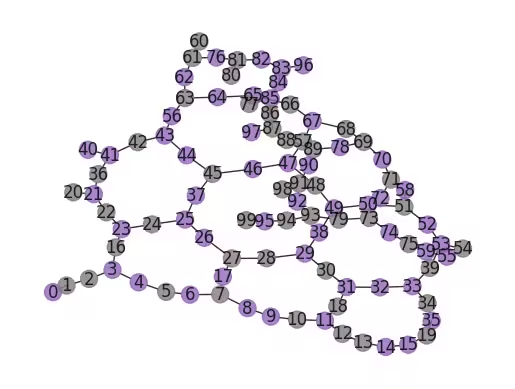
Infine, disegniamo un grafo basato sul risultato CVaR. Dividiamo i nodi del grafo in due insiemi in base al risultato CVaR. I nodi nel primo insieme sono colorati in grigio, e i nodi nel secondo insieme sono colorati in viola. Gli archi tra i due insiemi sono gli archi che vengono tagliati dalla partizione.
def plot_result(G, x):
    colors = ["tab:grey" if i == 0 else "tab:purple" for i in x]
    pos, _default_axes = rx.spring_layout(G), plt.axes(frameon=True)
    rx.visualization.mpl_draw(
        G,
        node_color=colors,
        node_size=150,
        alpha=0.8,
        pos=pos,
        with_labels=True,
        width=1,
    )

plot_result(graph_100, to_bitstring(sorted_result_dict[0][0], 100)[::-1])
Riferimenti
[1] Weidenfeller, J., Valor, L. C., Gacon, J., Tornow, C., Bello, L., Woerner, S., & Egger, D. J. (2022). Scaling of the quantum approximate optimization algorithm on superconducting qubit based hardware. Quantum, 6, 870.
[2] Matsuo, A., Yamashita, S., & Egger, D. J. (2023). A SAT approach to the initial mapping problem in SWAP gate insertion for commuting gates. IEICE Transactions on Fundamentals of Electronics, Communications and Computer Sciences, 106(11), 1424-1431.
[3] Barkoutsos, P. K., Nannicini, G., Robert, A., Tavernelli, I., & Woerner, S. (2020). Improving variational quantum optimization using CVaR. Quantum, 4, 256.
[4] Barron, S. V., Egger, D. J., Pelofske, E., Bärtschi, A., Eidenbenz, S., Lehmkuehler, M., & Woerner, S. (2023). Provable bounds for noise-free expectation values computed from noisy samples. arXiv preprint arXiv:2312.00733.
Prossimi passi
Se hai trovato questo lavoro interessante, potresti essere interessato al seguente materiale:
-
The intractable decathlon: un elenco di 10 problemi di ottimizzazione difficili per gli algoritmi di ottimizzazione classici, che potrebbero essere buoni casi d'uso per testare le tecniche introdotte in questo tutorial.
-
Un repository di best practice per l'ottimizzazione quantistica per migliorare ulteriormente i risultati del tuo workflow basato su QAOA.